










Picture this. It’s 9 PM on a Friday in July. You’re sitting on your back deck in Mississauga, and your yard is… dark. Just gone. The garden you spent all weekend planting? Invisible. The stone pathway you laid last fall? A trip hazard.
Now picture the same yard with a few well-placed LED fixtures. The walkway glows warm. Your maple tree throws soft shadows across the fence. The patio feels like a room, not a slab.
That’s what landscape lighting does. And it’s not just about looks – homeowners who invest in outdoor lighting see a 59% cost recovery when they sell, according to the NAR/NALP Remodeling Impact Report (2023). Landscape lighting also scored a perfect 10/10 Joy Score in that same study. Pretty telling.
Why Landscape Lighting Matters for Your Yard
1- Boosting Curb Appeal & Property Value
When dusk falls, many yards fade into darkness – but yours doesn’t have to. Well‑designed exterior landscape lighting ideas enhance your home’s appearance, highlight architectural features, and create striking appeal at night. Homeowners investing in smart lighting solutions see a meaningful improvement in how their property is perceived.
2- Enhancing Safety, Usability & Security After Dark
Good lighting across pathways, driveways and outdoor zones is essential. Think pathway lighting for gardens, lighting ideas for outdoor living spaces, and security‐minded uplights or motion sensors. Heavily trafficked outdoor areas become safer, and well‑lit perimeters can deter unwanted guests or hazards.
3- Extending Outdoor Living Hours & Creating Ambience
From twilight drinks on the patio to family time by the fire pit, lighting lets you use your yard long after sunset. Garden lighting ideas, backyard lighting design, and landscaping light ideas help set the mood – whether it’s relaxed lounging or entertaining. The right layering of ambient, accent and task light turns your yard into an immersive outdoor living space.
How to Choose the Right Landscape Lighting Strategy?
To bring your landscape lighting ideas to life, think of it in three layers:
- Ambient light – the general glow that makes an area usable (for example around patios, decks).
- Task light – focused light for specific functions (see backyard lighting design for dining or cooking zones).
- Accent light – draws attention to focal points like trees, water features or architectural elements (key for garden landscape lighting ideas and front yard landscape lighting ideas).
By combining these layers, your outdoor space avoids being “just lit” and instead becomes dynamic and rich.
Lighting Techniques: Uplighting, Downlighting, Silhouetting, Wall‑Washing
Here are key techniques relevant to outdoor landscape lighting ideas:
- Uplighting – fixtures at ground level or low height shine upward to accent trees or walls.
- Downlighting (or “moonlighting”) – lights mounted higher, shining downward to mimic natural moonlight over a yard.
- Silhouetting – backlighting a subject so you see its shape against a brighter background.
- Wall‑washing/grazing – lighting a wall surface either evenly (wash) or emphasizing texture (grazing) as part of your landscape wall lighting ideas plan.
Choosing Fixtures, Colour Temperature & Power Source
When implementing your landscaping lights ideas:
- Colour temperature: Aim for warm white (~2700 K‑3000 K) to keep the yard feeling inviting. Cool white lights feel less comfortable and may clash with home lighting.
- Fixture materials: Weather‑resistant finishes matter. Choose materials that hold up outside and match your home’s architecture.
- Power source:
- Solar units: easy installation; good for simpler zones. Also relevant for outdoor landscape lighting ideas.
- Low‑voltage LED systems: more control, better brightness, used for premium lighting.
- Beam angle & spacing: Narrow beams highlight features; wider beams for ambient. For paths or garden beds, spacing matters.
- Smart controls and automation: App‑controlled or timed systems help with yard lighting ideas and modern aesthetics.
Layering Your Lighting Plan
A smart lighting strategy begins with mapping out your zones: patio/dining area, pathways, front‑yard façade, garden beds, trees, water features. Then for each zone apply ambient + task + accent lights. For instance:
- Patio: string lights overhead (ambient) + table lanterns (task) + uplight a feature tree (accent) – this targets lighting ideas for outdoor living spaces.
- Front yard: low bollard lights along driveway (ambient) + step lights (task) + wall‑wash on home façade (accent) – linking to landscape lighting ideas for front of house and front yard landscape lighting ideas.
- Garden zone: stake lights within planting (ambient) + mini‑spotlights (accent) + hidden uplights on walls (accent) – echoing garden landscape lighting ideas and yard lighting ideas.
Budget & Installation Considerations
Your budget will determine the scale of installation:
- DIY budget: Solar stake lights, string lights, fewer zones. Great for simple decorative outdoor lighting ideas.
- Mid‑budget: Low‑voltage wired fixtures for key zones like front yard and backyard patio.
- Premium budget: Full design service (like Votatec offers), layered fixture plan, smart controls, high‑end materials and integrated LED landscape lighting ideas.
When installing, consider wiring depth, transformer placement, plant growth, seasonal changes – and maintenance requirements for longevity.
10 Stunning Landscape Lighting Ideas to Transform Your Yard
Now let’s dive into ten fully‑formed ideas you can apply to bring your yard alive at night – with angles for backyard landscape lighting ideas, front yard landscape lighting ideas, and LED landscape lighting ideas.
1. Pathway & Walkway Lighting
Illuminate the routes through your yard: entrance, garden walkways, steps.
Benefits:
- Safer movement at night, reduced trip hazards
- Guides guests and highlights your outdoor layout (important for front yard landscape lighting ideas and pathway lighting for gardens)
- Adds structure and definition to your landscape
Fixture suggestions & tips:
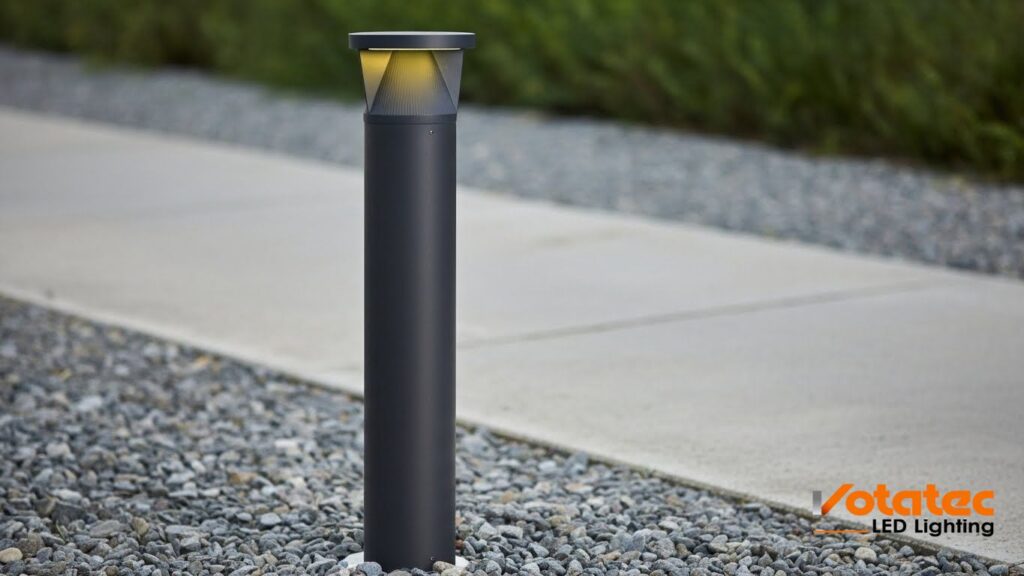
- Use low‑level stake lights or bollard lights along pathways.
- Recessed ground lights flush with paving offer sleek finishes and suit outdoor landscape lighting ideas.
- Space fixtures every 3‑4 metres (10‑13 ft) for even coverage.
- Set height around 12‑18″ above ground; angle lights so beam hits path surface, not eyes of guests.
- Choose warm white (~2700 K) colour to keep ambience soft.
- Hide wiring under pavers or choose solar versions for easier setup.
2. String Lights & Bistro‑Style Hanging Bulbs
Over patios, pergolas or across your yard create a festive and welcoming atmosphere.
Benefits:
- Instantly adds charm and ambience to outdoor living areas (lighting ideas for outdoor living spaces)
- Cost‑effective upgrade – works for casual entertaining or family gatherings.
Fixtures & tips:
- Opt for outdoor‑rated string lights (Edison‑style bulbs, LED filament).
- Hang zig‑zag across patio beams, between trees or across yard corners.
- Use sturdy mounting points and weather‑proof connections.
- Provide dimming option for mood shift from bright to relaxed.
- Match bulb colour to your wider lighting scheme to maintain consistency with backyard landscape lighting ideas.
3. Tree Uplighting & Moonlighting Effects
Large mature trees or feature shrubs provide ideal canvas for dramatic lighting.
Benefits:
- Adds vertical height and dimension to your yard – great for garden landscape lighting ideas and yard lighting ideas
- Creates silhouettes and shadows, makes your garden feel larger at night.
Fixtures & tips:
- For uplighting: use narrow‑beam spotlights at tree base to shine upward into the canopy.
- For moonlighting: mount LED downlights high in tree limb or eave, pointing downwards to emulate moonlight through foliage.
- Hide cables with tree‑friendly strapping (not screws) to protect tree health.
- Angle lights so beams filter through leaves, creating soft shadow play, but avoid shining directly into windows.
- Combine with accent lights on surrounding garden or wall wash to complete the scheme.
4. Garden Bed, Flower Bed & Planter Lighting
Highlight your garden beds and planters so they stay vibrant after dark.
Benefits:
- Keeps your planting design visible and attractive at night – central to garden landscape lighting ideas
- Adds texture and depth to your yard’s nighttime visuals.
Fixtures & tips:
- Use mini‑spotlights or stake lights low to the ground, aimed into the planting.
- Hide fixtures behind plants or under mulch to avoid daytime visibility.
- Choose warm white light to flatter foliage and flowers; avoid harsh colours unless used for seasonal accent.
- Angle lights well to avoid glare into neighbouring properties.
- Integrate with your planting schedule to ensure lights still shine as plants grow (important for backyard lighting design).
5. Water Feature & Pool‑Area Lighting
If you have a pond, fountain, pool or stream, lighting elevates its impact after dark.
Benefits:
- Reflective surfaces amplify light and add movement, luxury and calm to your yard.
- Extends pool or water‑feature use into the evening.
- Strong component of outdoor landscape lighting ideas.
Fixtures & tips:
- For pools: use underwater-rated LED lights or LED strips under coping.
- For fountains/ponds: spotlights angled into water or uplights on feature rocks/walls bordering water.
- Use splash‑proof and high‑IP rated fixtures with proper wiring.
- Consider cool white (~4000 K) for water surface, but surround with warm white to keep ambience balanced.
6. Façade & Architectural Highlight Lighting
Don’t overlook your home’s exterior: walls, columns, pergolas and built‑in features deserve attention too.
Benefits:
- Extends visual living space and integrates with your home architecture – perfect for landscape lighting ideas for front of house and exterior landscape lighting ideas
- Enhances curb appeal during evening and night.
Fixtures & tips:
- Use wall‑wash fixtures at base or top of walls for even illumination (linked to landscape wall lighting ideas).
- Uplights at building corners or entrance pillars add grandeur.
- Linear LED strips under eaves or pergolas produce subtle halo effect.
- Match fixture finish (bronze, black, stainless) to exterior materials for cohesion.
- Coordinate with other lighting zones so façade lighting doesn’t overpower garden lighting.
7. Deck, Patio & Outdoor Living Area Lighting
Your outdoor living zone – deck, covered patio, lounge or dining area – needs a comprehensive lighting plan.
Benefits:
- Encourages extended usability of outdoor space into evening and across seasons.
- Defines zones (entertaining, dining, relaxing) with layered lighting – key to lighting ideas for outdoor living spaces.
- Makes your yard function like an extension of your house.
Fixtures & tips:
- Step lights in risers and under‑bench LED strips for subtle, safe ambient lighting.
- Table lamps or lanterns for cozy accent lighting.
- Wall sconces or pendant lights over dining zones (if roofed).
- Task lighting for cooking/serving zones (near built‑in BBQ or counter).
- Use dimmers to shift mood from active entertaining to unwinding.
8. Solar & Low‑Voltage Energy‑Efficient Options
For sustainable and cost‐effective design, focus on LED landscape lighting ideas and eco‑friendly installation.
Benefits:
- Solar and low‑voltage systems reduce energy use, simplify installation, and align with sustainable design values.
- Works especially well for yard lighting ideas that don’t require wiring or heavy infrastructure.
Fixtures & tips:
- Solar pathway lights are convenient for driveways or garden edges; ensure good sun exposure.
- Low‑voltage LED systems: plan transformer size, wiring layout, and IP‑rated fixtures.
- Use smart timers or sensors to reduce unnecessary energy usage.
- Select LED fixtures rated for 15,000+ hours lifetime for long term durability.
9. Motion Sensor & Security Landscape Lighting
While ambience is key, function and safety matter too. Integrating security lighting rounds out your decorative outdoor lighting ideas with practical value.
Benefits:
- Motion‑activated or dusk‑dawn lighting helps deter intruders, improves visibility for arrivals, and aligns with modern backyard lighting design.
- Adds automatic functionality and can boost energy efficiency.
Fixtures & tips:
- Use downlights or floodlights with motion sensor heads, focused on entry points, driveways or hidden zones.
- Choose warm white lights (around 3000 K) to avoid harsh industrial appearance.
- Place sensors at correct angle so they’re triggered by arriving guests, not passing cars or pets.
- Integrate with smart home system (if available) for alerts or synced lighting.
10. Accent Lighting for Sculptures, Trees, Walls & Textures
Finally, select one or two standout focal features in your yard and let lighting make them shine. This is the signature move in many landscaping light ideas plans.
Benefits:
- Draws the eye, adds drama and luxury, and turns ordinary features into highlights – great for decorative outdoor lighting ideas.
- Adds depth and visual interest to your outdoor space.
Fixtures & tips:
- Use narrow beam spotlights (10°‑20°) to highlight sculptures or textured walls.
- Use silhouetting: place a light behind a tree or feature and let the viewer see the outline on a wall – a classic garden landscape lighting ideas technique.
- Wall‑grazing: situate a linear fixture close to a textured wall so light washes upward revealing texture – a direct tie to landscape wall lighting ideas.
- Coloured lighting may be used sparingly (holiday or accent), but prefer warm white for timelessness.
What Are the Most Common Landscape Lighting Mistakes?
Incandescent bulbs release 90% of their energy as heat rather than light (DOE). Using the wrong bulb type is just one of many mistakes homeowners make. Here are the big ones.
Over-lighting: More lumens isn’t better. Cool white at high brightness creates a harsh, institutional feel. Your goal is ambience, not a parking lot. Keep it warm, keep it subtle.
Glare and dark spots: Fixtures aimed at eye level or shining into windows defeat the purpose. And leaving gaps between lit zones creates uncomfortable contrast. Walk your yard at night during installation and adjust.
Ignoring maintenance: Dirt, leaves, and snow reduce light output fast. Wires get exposed. Plants grow over fixtures. Plan for seasonal cleanup and adjustments – especially in Canadian climates where freeze-thaw cycles shift ground and fixtures.
No layering: Using only one type of light – say, just path lights – makes everything flat. The best outdoor spaces combine ambient, task, and accent. Even two layers make a noticeable difference.
How Do You Maintain Landscape Lighting for Long-Lasting Results?
Regular Cleaning of Fixtures and Lenses
Debris, leaves, snow and mulch can reduce light output by up to 30%. Wipe lenses, clean stakes and ensure no debris is blocking beam paths.
Checking for Wire/Cord Damage and Weather Exposure
Low‑voltage wiring should be buried or in conduit; look for cracking, UV damage, corrosion or water ingress at junctions. Transformer ventilation must be adequate.
Replacing Bulbs with Correct Colour Temperature & Brightness
Even though LEDs last long, colour shift or output drop may occur over years. Replace bulbs with same colour temperature (e.g., warm white 2700 K) to maintain consistency.
Adjusting Lights Seasonally & Trimming Plants That Block Fixtures
Plants grow and may obstruct beams or cause unwanted shadows. Trim foliage, adjust angles, and retest pathways or accent lighting annually.
Using Timers or Smart Controls to Optimise Energy Use
Set zones to full brightness when entertaining, then dim later. Use motion sensors for security zones and schedule patios to turn off or dim automatically – smart controls make LED landscape lighting ideas even more efficient.
How to Pick the Right Lighting Partner in Canada
At Votatec, we specialise in bringing high‑quality, design‑forward lighting solutions to homeowners who wantThe residential landscape lighting segment is growing at 9.9% annually through 2030 (Grand View Research), and more suppliers are entering the Canadian market every year. So how do you pick the right one? Here’s what to look for:
CSA certification. Any outdoor electrical product used in Canada should carry CSA certification. This isn’t a “nice to have” – it’s a safety standard. Products designed for Canadian temperature extremes (-40C to +50C rated) will outlast generic imports.
In-stock availability. If you’re a contractor on a schedule, waiting 6-8 weeks for fixtures from overseas isn’t an option. Suppliers with 500+ SKUs in stock, like Votatec, offer immediate fulfillment and fast shipping across Canada.
Design support. A good supplier doesn’t just sell fixtures. They help you plan zones, select beam angles, choose colour temperatures, and match finishes to architecture.
Ready to start your project? Browse Votatec’s landscape LED collection or contact our team for a consultation.
Frequently Asked Questions (FAQs)
1- What is the best colour temperature for outdoor landscape lighting?
For most outdoor living and ambience areas, aim for a warm white colour temperature around 2700 K‑3000 K. This provides a comfortable, inviting glow that complements both plantings and architecture. Cooler white lights (4000 K+) can feel harsh, and may not suit garden or living zones as well.
2- Can I install landscape lighting myself or should I hire a professional?
If you’re installing simple solar stake lights or string lights, you can manage DIY. But for a comprehensive system – such as low‑voltage wiring, accent uplighting, smart controls or lighting near water features – it’s best to hire a professional to ensure safety, code compliance and optimal effect.
3- How many lights do I need to light a pathway or garden bed effectively?
For a standard walkway, spacing lights every 3‑4 metres (10‑13 feet) along each side provides good coverage. For garden beds, placing a mini‑spot or stake light per major planting grouping or every 4‑6 metres (13‑20 feet) works well. Adjustments depend on fixture output and beam angle.
4- Are solar landscape lights good enough compared to wired low‑voltage systems?
Solar lights are convenient, cost‑effective and quick to install – ideal for yard lighting ideas or smaller zones. However, they depend on sun exposure, often have lower brightness and fewer control options. Wired low‑voltage systems offer more brightness, better control (dimmers, zoning) and long‑term durability – but require wiring and professional setup.
5- How do I create a layered lighting effect in my outdoor space?
To build layers:
- Start with ambient lighting (general area: patios, paths).
- Add task lighting (steps, seating, cooking areas).
- Add accent lighting (feature trees, walls, art pieces).
Vary height, beam angle and intensity so your space has depth and dimension rather than flat, “just lit” appearance.
Why Your Yard Deserves Landscape Lighting
Transforming your yard into an illuminated outdoor sanctuary is absolutely within reach – and with the right strategy, you’ll enjoy both aesthetics and functionality year‑round. From front yard landscape lighting ideas to backyard landscape lighting ideas, LED landscape lighting ideas to decorative outdoor lighting ideas, the ten proposals above provide a roadmap for your lighting journey.
At Votatec, we’re passionate about helping homeowners bring their outdoor spaces to life after dusk – improving curb appeal, usability, safety and ambience. Whether you take on select lighting upgrades or embark on full‑scale installation, we’re here to guide you. Let your yard shine, night after night.
Ready to start? Get in touch with Votatec today to bring your vision into the evening light.