












 (+1) 905 597 5955




Two devices. Two very different jobs. Mix them up and you’ve got a code violation.
If you’ve ever stood in the electrical aisle wondering about AFCI vs GFCI, you’re not alone. Both protect you from electrical hazards. Both are required by the Canadian Electrical Code. But they protect against completely different dangers.
Here’s the short version:
- AFCI (Arc Fault Circuit Interrupter): Prevents electrical fires by detecting dangerous arcing in wires
- GFCI (Ground Fault Circuit Interrupter): Prevents electric shock by detecting current leakage to ground
That’s the core difference. AFCI stops fires. GFCI stops shocks. You need both in a modern Canadian home, just in different locations.
Now let’s break down exactly how each one works, where the code requires them, and how to choose the right protection for every room in your house.
What Is an AFCI Breaker?
An AFCI breaker is a circuit breaker that detects dangerous electrical arcs and shuts off power before a fire can start. The name stands for Arc Fault Circuit Interrupter.
So what is an AFCI breaker actually detecting? Arcs.
An electrical arc happens when current jumps across a gap in a wire or connection. You’ve seen small arcs before, that little spark when you unplug something. Those are normal. But dangerous arcs are different. They’re sustained, they generate intense heat, and they can ignite surrounding materials.
Dangerous arcs happen for a few reasons:
- Damaged wire insulation (from nails, staples, or rodents)
- Loose connections in outlets or switches
- Frayed cords on appliances
- Overheated wiring behind walls
The scary part? These arcs can smoulder for hours before igniting. And they often happen inside walls where you can’t see them.
Traditional circuit breakers won’t help here. They only trip when there’s an overload or short circuit. An arc fault might draw less current than normal operation, so a standard breaker sees nothing wrong.
AFCI breakers are smarter. They monitor the electrical waveform and detect the signature patterns of dangerous arcing. When they sense an arc fault, they trip in a fraction of a second.
According to the Electrical Safety Authority (ESA), arc faults are a leading cause of electrical fires in Canadian homes. AFCI protection is one of the most effective ways to prevent them.
How AFCI Technology Works?
AFCI breakers use microprocessors to analyze the current flowing through a circuit. They’re looking for two types of arcs:
Series arcs: These occur along a single wire, like when a wire is damaged or a connection is loose. Current flows through the arc instead of the conductor.
Parallel arcs: These occur between two conductors, like a hot wire and neutral, or hot wire and ground. Often caused by damaged insulation allowing wires to touch.
The breaker’s electronics can distinguish between normal arcs (like those from a vacuum motor or light switch) and dangerous arcs that could start fires. It’s not perfect, which is why nuisance tripping sometimes happens. But it’s far better than no protection at all.

What Is a GFCI and How Does It Work?
A GFCI, or Ground Fault Circuit Interrupter, protects people from electric shock. It monitors the current flowing out on the hot wire and returning on the neutral wire. Those two numbers should match.
If they don’t match, current is leaking somewhere. Maybe through a person. Maybe through water. Either way, the GFCI trips instantly.
Here’s a simple example. You’re using a hair dryer near a sink. The dryer falls into the water while you’re touching it. Current now has a path through the water and through you to ground. A standard circuit breaker won’t trip because the current flow isn’t high enough to trigger it. But a GFCI detects that imbalance, maybe 5 milliamps, and cuts power in about 1/40th of a second.
That’s fast enough to prevent electrocution. Usually.
Ground faults happen in wet locations because water is conductive. That’s why GFCI protection is required in bathrooms, kitchens, garages, and outdoor areas. Anywhere water and electricity might meet.
The 5 Milliamp Threshold
Why 5 milliamps? Because that’s roughly the threshold where electrical current becomes dangerous to humans. At 5mA, you’ll feel a shock. At 10-20mA, you can’t let go. At 100mA, your heart can stop.
GFCIs are calibrated to trip at 4-6 milliamps of imbalance. That’s sensitive enough to protect you, but not so sensitive that normal operation causes constant tripping.
The CSA Group sets the standards for GFCI devices sold in Canada. Look for the CSA certification mark on any device you buy.
AFCI vs GFCI Protection: What Does Each Prevent?
Understanding AFCI vs GFCI protection comes down to understanding the hazards each one addresses. They’re not interchangeable.
| Feature | AFCI | GFCI |
| Protects Against | Electrical fires from arcing | Electric shock from ground faults |
| Detection Method | Monitors waveform for arc signatures | Monitors current imbalance (hot vs neutral) |
| Trip Threshold | Arc pattern detected | 4-6 milliamps imbalance |
| Trip Speed | Fraction of a second | ~1/40th of a second |
| Primary Concern | Fire prevention | Shock prevention |
| Typical Hazard Location | Inside walls, at connections | Wet areas, outdoor use |
Think of it this way. AFCI protection is about what’s happening inside your walls. GFCI protection is about what’s happening where you touch electrical devices.
A damaged wire behind your bedroom wall? AFCI handles that. A toaster near your wet kitchen counter? GFCI handles that.
Different problems. Different solutions. Both required.
AFCI vs GFCI Outlet: Key Differences
When comparing AFCI vs GFCI outlet options, the physical differences are subtle but the functions are distinct.
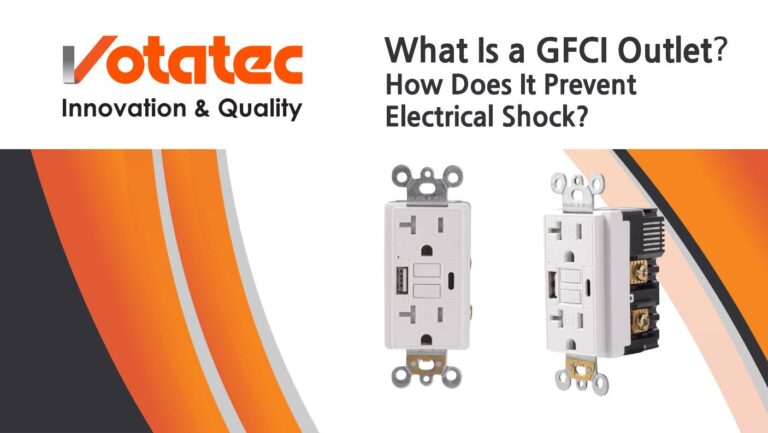
GFCI Outlets
You’ve seen these. They have two buttons in the centre, TEST and RESET. Usually found in bathrooms, kitchens, and garages. When a ground fault occurs, the outlet trips and you press RESET to restore power.
GFCI outlets protect the outlet itself plus any “downstream” outlets wired after it on the same circuit. One GFCI outlet can protect multiple regular outlets.
AFCI Outlets
AFCI outlets exist but they’re less common than AFCI breakers. They also have TEST and RESET buttons, but they’re detecting arc faults instead of ground faults. You might see these in older homes where upgrading the panel isn’t practical.
Visual Differences
Both have the two-button design. The labelling tells you which is which. GFCI outlets say “GFCI” or “Ground Fault Circuit Interrupter.” AFCI outlets say “AFCI” or “Arc Fault Circuit Interrupter.”
Some newer devices combine both functions. These are labelled as “Dual Function” and provide both arc fault and ground fault protection in one outlet.
Where Each Goes
GFCI outlets go where shock hazards exist. Bathrooms, kitchens within 1.5 metres of a sink, garages, outdoors, unfinished basements.
AFCI protection typically comes from the breaker panel, covering entire circuits. But AFCI outlets can be used for specific applications or when panel upgrades aren’t feasible.
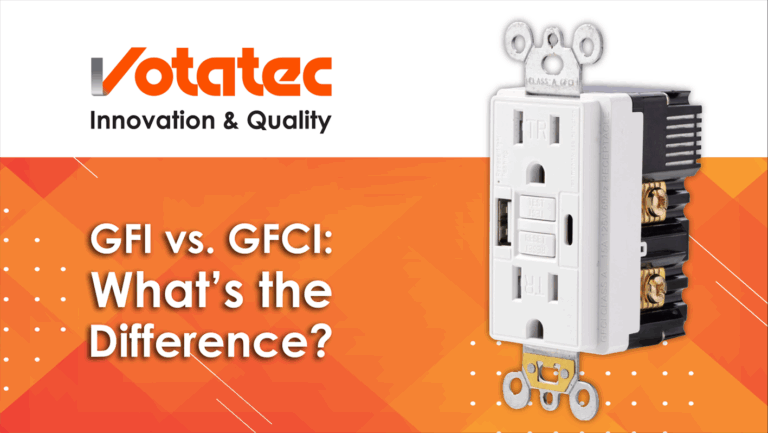
Read more: GFI vs. GFCI: What’s the Difference?
AFCI vs GFCI Breaker: How They Compare
Looking at AFCI vs GFCI breaker options, both install in your electrical panel and protect entire circuits. But they serve different purposes.
| Feature | AFCI Breaker | GFCI Breaker |
| Installation Location | Electrical panel | Electrical panel |
| Protection Scope | Entire circuit | Entire circuit |
| Cost (approximate) | $40-60 CAD | $30-50 CAD |
| Test Button | Yes | Yes |
| Common Application | Bedrooms, living areas | Bathrooms, kitchens, outdoors |
| Code Requirement | CEC Section 26-656 | CEC Section 26-700 |
- AFCI Breakers
These replace standard breakers in your panel. They protect the entire circuit from arc faults, from the panel all the way to every outlet and device on that circuit. Most new home construction uses AFCI breakers for bedroom and living area circuits.
AFCI breakers have a test button on the face. Press it monthly to verify the breaker is working properly.
- GFCI Breakers
GFCI breakers also replace standard breakers and protect entire circuits from ground faults. They’re an alternative to installing GFCI outlets at each location. One GFCI breaker can protect a bathroom circuit instead of installing multiple GFCI outlets.
The downside? If the breaker trips, you have to go to the panel to reset it. With a GFCI outlet, you just press the button at the outlet location.
- Cost Considerations
GFCI breakers cost more upfront than GFCI outlets, but they simplify wiring. For new construction, contractors often prefer breaker-level protection. For retrofits, outlets are usually easier to install.
AFCI breakers are the standard approach for arc fault protection. AFCI outlets are less common and typically used only when panel access is limited.
AFCI vs GFCI Code Requirements in Canada
The Canadian Electrical Code (CEC) specifies where AFCI vs GFCI code requirements apply. These requirements have expanded significantly over the past decade.
AFCI Requirements (CEC Section 26-656)
AFCI protection is required for 125V, 15A and 20A circuits supplying outlets in:
- Bedrooms
- Living rooms
- Family rooms
- Dining rooms
- Dens and libraries
- Sunrooms
- Recreation rooms
- Closets
- Hallways
- Similar rooms or areas
Basically, if it’s a living space that isn’t a kitchen or bathroom, it likely needs AFCI protection.
GFCI Requirements (CEC Section 26-700)
GFCI protection is required for 125V receptacles in:
- Bathrooms
- Kitchens (within 1.5 metres of sink)
- Garages and accessory buildings
- Outdoor locations
- Unfinished basements
- Crawl spaces
- Hot tub and spa areas
- Boat houses and boat hoists
- Laundry areas (for washing machine receptacle)
The Electrical Safety Authority enforces these requirements in Ontario. Other provinces have their own authorities but follow the CEC.
AFCI vs GFCI Residential Use: Room-by-Room Guide
Here’s a quick reference for AFCI vs GFCI residential use in a typical Canadian home:
| Room/Area | AFCI Required? | GFCI Required? |
| Bedrooms | Yes | No |
| Living Room | Yes | No |
| Family Room | Yes | No |
| Dining Room | Yes | No |
| Hallways | Yes | No |
| Closets | Yes | No |
| Bathroom | No | Yes |
| Kitchen (within 1.5m of sink) | No | Yes |
| Kitchen (other outlets) | Depends on location | Check local code |
| Garage | No | Yes |
| Outdoor | No | Yes |
| Unfinished Basement | No | Yes |
| Laundry Room | No | Yes (washing machine) |
Some jurisdictions require both AFCI and GFCI in certain locations, like kitchens and laundry rooms. Check with your local electrical authority for specific requirements.
Installation and Wiring Considerations
Installing AFCI and GFCI devices isn’t complicated, but there are some differences worth understanding.
AFCI vs GFCI Wiring: Installation Differences
- GFCI Wiring
GFCI outlets have two sets of terminals: LINE and LOAD. The LINE terminals connect to the incoming power from the panel. The LOAD terminals connect to downstream outlets you want to protect.
Get this backwards and the GFCI won’t work. It’s a common mistake.
GFCI breakers are simpler. They wire like a standard breaker, with the addition of a neutral pigtail that connects to the neutral bar in the panel.
- AFCI Wiring
AFCI breakers require both hot and neutral wires from the circuit to connect to the breaker itself. This is different from standard breakers, which only connect to the hot wire. The neutral pigtail on an AFCI breaker connects to the panel’s neutral bar.
- Shared Neutrals
Here’s where things get tricky. Older homes sometimes have circuits that share a neutral wire between two circuits. This creates problems for both AFCI and GFCI devices.
When two circuits share a neutral, the return current from one circuit flows through the neutral of another. AFCI and GFCI devices see this as an imbalance and trip constantly.
The solution? Separate the neutrals or use a two-pole AFCI/GFCI breaker designed for shared neutral circuits. This is a job for a licensed electrician.
- Compatibility Issues
Some older devices cause nuisance tripping with AFCI breakers. Certain vacuum cleaners, treadmills, and other motorized equipment can create electrical noise that looks like arcing to the breaker.
If you’re getting frequent trips, try the device on a different circuit first. If the problem persists, consult an electrician. There may be a wiring issue, or you might need a newer AFCI breaker with improved electronics.
Do You Need Both AFCI and GFCI?
Sometimes, yes. You need both AFCI and GFCI protection.
The Canadian Electrical Code now requires dual protection in some locations. Kitchen countertop circuits, laundry areas, and some bathroom circuits may require both arc fault and ground fault protection depending on your jurisdiction.
Dual Function Breakers
Dual function AFCI/GFCI breakers provide both types of protection in one device. They’re more expensive than single-function breakers, usually $50-80 CAD, but they simplify installation when both protections are required.
These breakers detect both arc faults and ground faults. One device, complete protection.
For new construction, dual function breakers are often the most practical solution. For retrofits, you might combine an AFCI breaker at the panel with GFCI outlets at specific locations.
When Combination Protection Makes Sense
Consider dual function protection for:
- Kitchen circuits (especially near sinks)
- Laundry room circuits
- Any location where code requires both AFCI and GFCI
- Situations where you want maximum protection
The cost difference between a standard breaker and a dual function breaker is maybe $30-40. For the peace of mind, it’s worth it.
Frequently Asked Questions About AFCI vs GFCI
Can I use a GFCI outlet on an AFCI circuit?
Yes, absolutely. In fact, this is a common setup. The AFCI breaker at the panel provides arc fault protection for the entire circuit, while GFCI outlets at specific locations provide ground fault protection where needed. The two technologies don’t interfere with each other.
Why does my AFCI breaker keep tripping?
Nuisance tripping usually has one of three causes: a wiring issue (loose connection, damaged wire), an incompatible device (some older appliances), or a shared neutral situation. Try unplugging everything on the circuit and resetting. If it holds, plug devices back in one at a time to identify the problem. If it trips immediately with nothing plugged in, call an electrician.
Are AFCI and GFCI outlets interchangeable?
No. They look similar and both have test/reset buttons, but they protect against different hazards. Installing a GFCI where code requires AFCI (or vice versa) is a code violation and leaves you unprotected against the relevant hazard. Always install the correct device for the location.
How often should I test AFCI and GFCI devices?
Monthly testing is recommended. Press the TEST button, verify the device trips, then press RESET to restore power. If a device doesn’t trip when tested, replace it immediately. Both AFCI and GFCI devices can fail over time, especially after a surge event.
Can I install AFCI or GFCI devices myself?
GFCI outlets can be a DIY project if you’re comfortable with basic electrical work. Turn off power, verify it’s off, and follow the wiring instructions carefully. AFCI and GFCI breakers require work inside your electrical panel, which is generally best left to licensed electricians. In some provinces, homeowner electrical work requires permits and inspection.
Protect Your Home with the Right Devices
Understanding AFCI vs GFCI protection is straightforward once you know the basics. AFCI prevents fires by detecting dangerous arcs. GFCI prevents shocks by detecting current leakage. Both are required by the Canadian Electrical Code, just in different locations.
Quick recap:
- AFCI: Required in bedrooms, living areas, hallways, and similar spaces
- GFCI: Required in bathrooms, kitchens, garages, outdoors, and wet locations
- Dual Function: Provides both protections, required in some locations
For any electrical project, verify your local code requirements and consider consulting a licensed electrician. Electrical safety isn’t the place to cut corners.
Votatec carries a range of electrical products designed to meet Canadian safety standards. Browse our selection for CSA-certified options that help keep your home or facility protected.
Explore our electrical safety products to find the right protection for your next project.