












 (+1) 905 597 5955


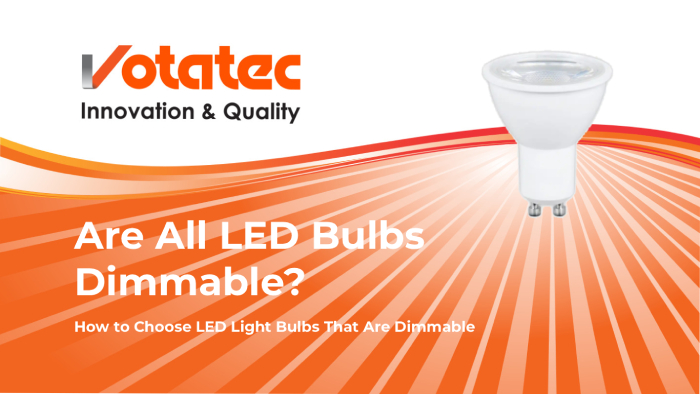

Short answer: No. Most LED bulbs are not dimmable by default. Only bulbs explicitly labelled “dimmable” have the internal circuitry to handle reduced power without flickering, buzzing, or failing prematurely. If you need dimming capability, you must buy the right bulb and pair it with a compatible dimmer switch.
This guide walks through everything facility managers, electrical contractors, and building owners need to know before specifying LED light bulbs that are dimmable.
What Makes a Dimmable LED Bulb Different?
Every LED bulb runs on a component called a driver. The driver converts AC mains power into the low-voltage DC current the LED chip actually needs to operate.
In a non-dimmable LED, that driver does one job: deliver a fixed current at full brightness. It can’t handle a partial voltage signal. Feed it a reduced voltage from a dimmer switch, and it either stays at full brightness, flickers, buzzes, or shuts off completely.
A dimmable LED driver is different. It’s built to read the incoming control signal and adjust output current proportionally. The result is a smooth, stable reduction in light output. No flicker. No buzz.
The key point: Dimming capability lives in the driver, not the LED chip itself. You can’t retrofit a non-dimmable bulb to be dimmable. The driver must be specified from the start.
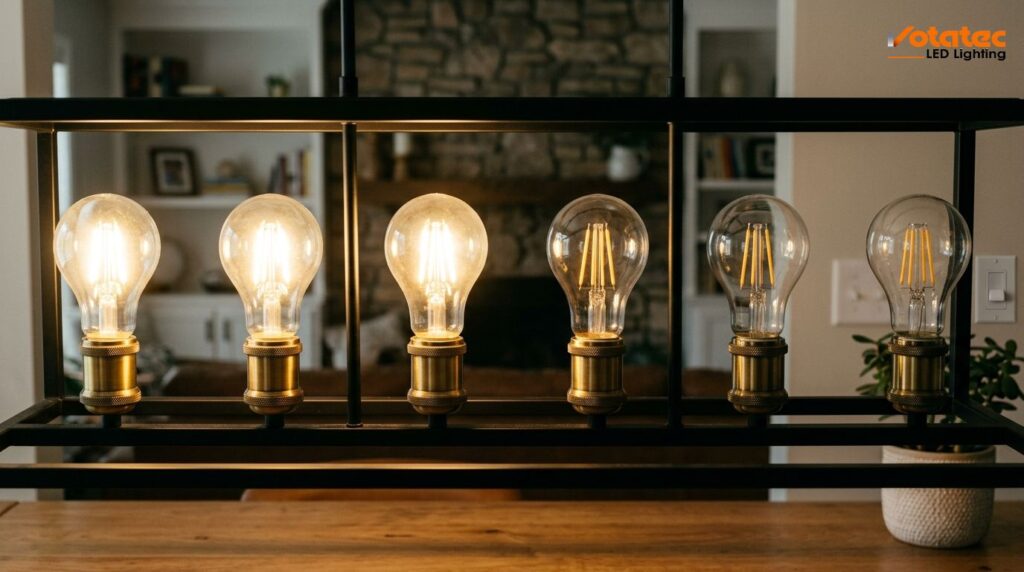
How to Tell If an LED Bulb Is Dimmable
There are three reliable ways to check before you buy or install.
1. Check the Packaging
The most direct method. Dimmable LED bulbs say so on the box. Look for “dimmable” in the product name or in the specifications printed on the back. If the packaging doesn’t mention dimming at all, assume it isn’t.
2. Check the Bulb Itself
No packaging? Inspect the base or neck of the bulb. Most dimmable LEDs have “dimmable” stamped or printed on the glass, the E26/E27 base, or the GU10 housing. It’s sometimes small. It’s there if the bulb supports it.
3. Look Up the Model Number
If a bulb is already installed and you’re not sure, find the model number printed on the base and search the manufacturer’s website. The product page will confirm dimming capability and typically list compatible dimmer switches.
When in doubt, treat it as non-dimmable. Connecting an unlabelled LED to a dimmer switch can shorten its lifespan significantly or damage the fixture entirely.
What Happens If You Use a Non-Dimmable LED with a Dimmer Switch?
Three things typically go wrong – and none of them are acceptable in a commercial installation.
Flickering. The driver can’t interpret a partial voltage signal. It switches rapidly between on and off, creating a strobe effect that’s visually irritating and potentially hazardous in occupied commercial spaces.
Buzzing. Electromagnetic interference from an incompatible dimmer causes components inside the driver to vibrate audibly. It sounds like a faint hum coming from the fixture or ceiling cavity.
Shortened lifespan. Even when a bulb doesn’t visibly flicker or buzz, running a non-dimmable LED on a dimmer creates thermal stress inside the driver. A bulb rated for 50,000 hours can fail at 10,000 hours or less. See our guide to how long LED bulbs really last for a full breakdown of what shortens LED lifespan in practice.
In some cases, a mismatched setup also damages the dimmer switch itself – adding a second cost to an avoidable mistake.
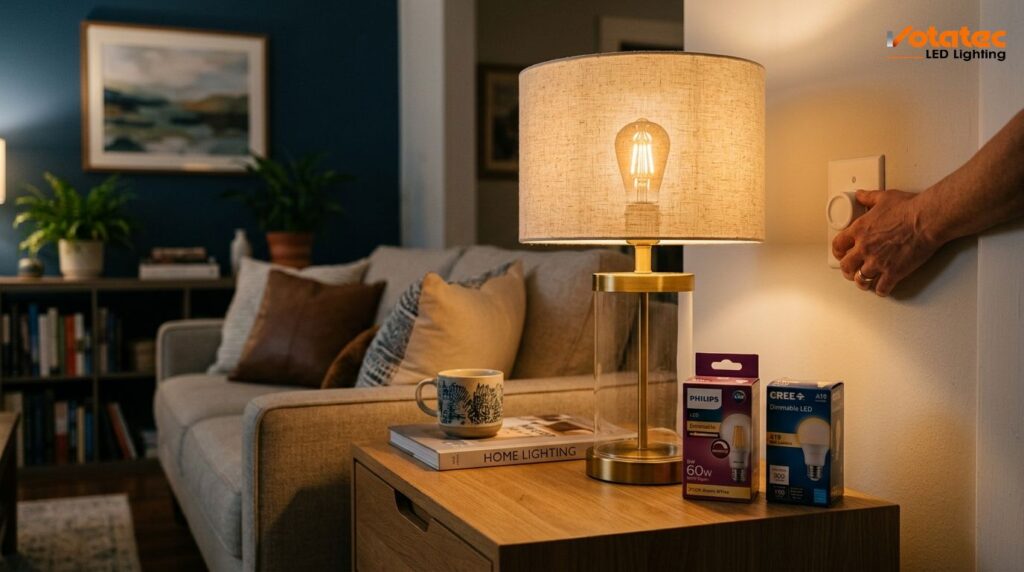
The Four Types of LED Dimming Technology
Not all dimmable systems work the same way. Matching the right dimming protocol to your application is one of the most common sources of problems in commercial lighting projects.
TRIAC Dimming (Phase-Cut)
TRIAC dimming is the standard in Canadian residential lighting. Most standard wall dimmer switches use TRIAC technology. It works by cutting portions of the AC voltage wave to reduce the power delivered to the fixture.
It’s inexpensive and easy to install without rewiring. The trade-off is a higher chance of compatibility issues with LEDs, since TRIAC dimmers were originally designed for incandescent and halogen loads. The result can be audible buzzing, flickering at the low end of the dimming range, or a narrow overall range – many TRIAC-dimmed LEDs won’t go below 10-20% brightness before cutting out.
Good for: Residential, small offices, and retrofit projects where rewiring isn’t practical.
0-10V Dimming
This is the commercial standard. A separate low-voltage control wire carries a DC signal between 0V and 10V to the fixture driver. 10V means full brightness; 0V means minimum output (or off, depending on the fixture).
Dimming is smooth and flicker-free down to very low levels. It integrates cleanly with building management systems (BMS), occupancy sensors, and daylight harvesting controls. The trade-off is additional control wiring and a compatible 0-10V driver in every fixture.
Good for: Offices, warehouses, schools, hospitals, and any commercial space with automated lighting controls.
DALI (Digital Addressable Lighting Interface)
DALI is a digital protocol that takes 0-10V a step further. Each fixture has a unique digital address and can be controlled individually or in groups. You can set scene presets, schedule changes, and report status back to a central system – all over the same wiring.
Commissioning a DALI system costs more and takes longer. It gives facility managers precise, zone-by-zone control and detailed energy reporting – which matters for buildings targeting LEED certification or government energy-reporting requirements.
Good for: Large commercial buildings, healthcare facilities, and government projects with energy monitoring mandates.
PWM Dimming (Pulse-Width Modulation)
PWM dimming rapidly switches the LED on and off at a frequency the human eye can’t detect. The ratio of on-time to off-time determines perceived brightness. PWM is common in architectural and display applications but is rarely the right choice for standard commercial ceiling fixtures.
How to Choose the Right Dimmer Switch for Dimmable LED Bulbs
Even with a properly labelled dimmable LED bulb, the dimmer switch has to match it. This is where many installations fail after the initial commissioning.
Replace Old Incandescent Dimmers
Incandescent dimmers were designed for loads of 300W to 600W. A single LED bulb draws 5W to 15W. That’s often below the minimum load threshold of an incandescent dimmer, which causes flickering, buzzing, or an outright failure to dim. Always replace incandescent dimmers with LED-rated dimmer switches when upgrading fixtures.
Check Minimum and Maximum Load Ratings
LED-rated dimmers list both a minimum and maximum wattage. A typical residential LED dimmer might be rated for a 10W minimum and 150W maximum. If your total connected LED load falls outside that range, expect problems.
The minimum load issue is particularly common in commercial projects. A small meeting room with four 8W LED panels totals 32W – which may fall below a dimmer’s threshold if you haven’t checked the specs.
Verify the Compatibility List
Leading dimmer manufacturers publish tested compatibility lists for their dimmers paired with specific LED bulb and driver models. Before specifying or ordering in bulk, confirm your exact bulb and dimmer combination appears on that list. Browse LED dimmer switches available through Votatec to see models tested with common Canadian commercial LED loads.
This step matters most in commercial projects involving dozens or hundreds of fixtures. Running a small pilot test before the full installation saves significant time and callbacks after the fact.
Canadian Commercial Circuits: 347V vs 120V
In many Canadian commercial and industrial buildings, lighting circuits run at 347V, not the 120V standard in residential and light commercial applications. Never substitute a 120V residential dimmer on a 347V circuit. It’s a code violation under the Canadian Electrical Code and a safety hazard. Specify 347V-rated controls from the start.
Dimmable LED Lighting in Commercial Settings
For facility managers and electrical contractors, dimmable LED systems are more than a comfort feature. They’re a practical energy management tool.
Energy Savings Through Dimming
Dimming an LED to 50% reduces energy consumption by roughly 40%. Lifespan extends proportionally. Across an office floor, warehouse, or multi-tenant building, the cumulative savings add up quickly. For a full look at what these savings mean for a commercial retrofit budget, see our commercial lighting upgrades cost and ROI guide.
Canadian utilities and provincial rebate programmes – including Save on Energy (Ontario), BC Hydro’s Energy Efficiency Programme, Efficiency Nova Scotia, and federal programmes through Natural Resources Canada – frequently offer incentives for lighting projects that include occupancy sensing and daylight harvesting controls. Those incentives can offset 20% to 50% of project costs. Always verify current programme eligibility before specifying, as terms change year to year.
Integration with Building Management Systems
Commercial 0-10V and DALI systems connect directly to a building’s BMS. Lighting responds automatically to occupancy sensors, time schedules, and daylight sensors. A properly designed system can reduce lighting energy use by 50% to 60% compared to an uncontrolled fixed-output installation.
Colour Temperature Stability When Dimming
One detail that matters in retail, healthcare, and hospitality spaces: some lower-quality dimmable LED drivers shift colour temperature as the bulb dims. A fixture that delivers a clean 4000K at full brightness can drift warmer as it dims down. For applications where colour accuracy and consistency matter, specify fixtures with “CCT-stable” or “colour-constant” dimming rated across the full output range. Our LED colour temperature guide covers Kelvin selection for different commercial spaces.
6 Common Mistakes to Avoid
- Using an old incandescent dimmer with new LED bulbs. The dimmer’s minimum load won’t be met. Replace it with an LED-rated model.
- Not checking the manufacturer compatibility list. Two dimmable products from reputable brands can still be incompatible. The list is the only way to confirm.
- Mixing dimmable and non-dimmable bulbs on the same dimmer circuit. The non-dimmable bulbs disrupt the entire circuit. All bulbs on a dimmer circuit must be dimmable.
- Ignoring minimum load thresholds. A few LED bulbs totalling less than the dimmer’s rated minimum creates persistent problems. Check total wattage against the dimmer spec sheet.
- Using a 120V dimmer on a 347V commercial circuit. This violates the Canadian Electrical Code. Specify voltage class correctly from the design phase.
- Skipping a pilot test before bulk installation. In any project with 10 or more fixtures, test your specific bulb-and-dimmer combination in situ before the full rollout.
FAQ about led light Bulbs That Are Dimmable
Can I use a dimmable LED bulb in a non-dimmed fixture?
Yes. A dimmable LED bulb works fine in a standard, non-dimmed circuit. The dimmable driver simply runs at full output, the same as a non-dimmable driver would. There’s no downside to using dimmable bulbs in non-dimmed applications, other than a slightly higher purchase price per bulb.
Why is my dimmable LED flickering even though I have a compatible dimmer?
A few things cause flickering even with the right pairing. The total wattage on the circuit may be below the dimmer’s minimum load rating. The dimmer may need calibration – many have adjustable low-end trim settings accessible from the faceplate. The bulbs may be near the end of their lifespan. Loose wiring connections also cause flickering independent of the dimmer.
What does “dimmable to X%” mean on LED bulb specs?
It tells you the lowest brightness level the bulb can reach before cutting out or flickering. A bulb that dims to 5% gives substantially more range than one that only dims to 20%. For accent lighting, hospitality applications, or spaces that need very low ambient light levels, look for a low-end rating of 10% or below.
Is 0-10V dimming better than TRIAC for commercial lighting?
For most commercial applications, yes. 0-10V delivers smoother dimming, better low-end performance, and cleaner BMS integration. TRIAC is appropriate for small offices or retrofit projects where rewiring isn’t practical. For new commercial construction, 0-10V or DALI is almost always the right choice.
Can I retrofit existing commercial fixtures for dimming?
Sometimes. If the existing fixtures use driver-replaceable modules, you may be able to swap in a 0-10V-compatible driver without replacing the fixture housing. For integrated LED fixtures where the driver and module are a single unit, a full fixture replacement is typically needed. An electrical contractor can assess this on a case-by-case basis during the audit phase.
Do dimmable LED bulbs cost more?
Typically 10% to 25% more at retail compared to equivalent non-dimmable models. The additional cost comes from the more complex driver circuitry. At wholesale volumes for commercial projects, the price gap is often smaller.
Ready to Specify Dimmable LED Bulbs for Your Project?
Choosing LED light bulbs that are dimmable is straightforward once you know what to look for: buy bulbs labelled dimmable, replace old incandescent dimmers with LED-rated ones, verify compatibility, and use 0-10V for any commercial space that integrates with a BMS.
For more detail on how the dimmer switch works and how to select the right one, see our guide to LED dimmer switches and how they work. Planning a full building retrofit? The commercial LED retrofit guide covers project planning, energy auditing, and rebate programme eligibility from start to finish.
Questions about sourcing dimmable LEDs or controls for a commercial or institutional project in Canada? Contact Votatec for wholesale pricing and product recommendations.