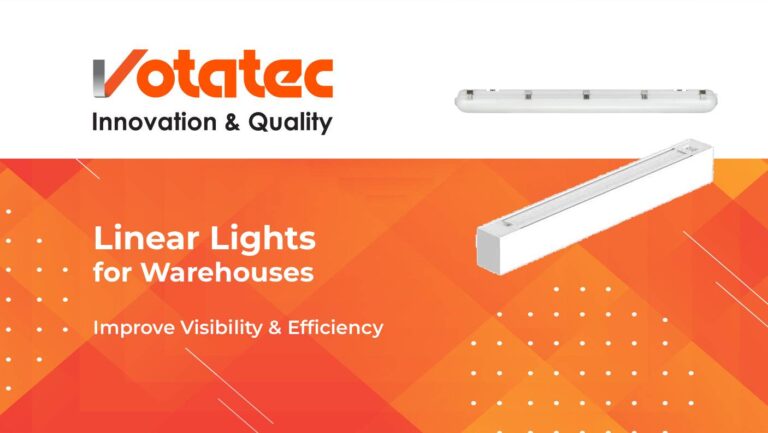









Here’s some quick math: 200 fixtures × 200W savings × 4,000 operating hours per year × $0.13/kWh = $20,800 in annual energy savings. Payback? Under two years for most commercial buildings. Sometimes less with provincial rebates.
That’s the real story behind commercial lighting upgrades. Not the marketing fluff. Not the vague promises. Just straightforward numbers that make facility budgets work harder.
Canadian businesses spend roughly 25-30% of their total energy budget on lighting alone. And if your building still runs fluorescent tubes, metal halides, or old HID fixtures, you’re burning money. Literally. Those legacy systems convert about 30% of their energy into heat instead of light. Kind of ridiculous when you think about it.
Commercial lighting upgrades, specifically switching to LED technology, cut energy consumption by 50-75% on average. And the benefits go way beyond your hydro bill. You get better light quality, longer fixture life, lower maintenance costs, and a building that meets current Canadian energy codes. Plus, you’ll likely qualify for utility rebates that cover 30-50% of your project cost.
So why are so many Canadian buildings still running outdated lighting? Mostly because the upfront cost feels intimidating. But once you see the numbers, the decision pretty much makes itself.
Let’s break it all down.
Quick Spec Box: Commercial LED Upgrade at a Glance
| Specification | Details |
| Energy Savings | 50-75% vs. fluorescent/HID |
| LED Lifespan | 50,000 – 100,000 hours |
| Colour Temperature | 3500K – 5000K (office to industrial) |
| CRI (Colour Rendering) | 80+ standard, 90+ for retail |
| Payback Period | 1.5 – 3 years typical |
| Available Rebates | Up to 50% in Ontario, BC, Quebec |
| Certifications | DLC Listed, CSA Approved, Energy Star |
| Maintenance Savings | 70-80% reduction |
Why Commercial LED Lighting Upgrades Pay for Themselves
Let’s talk money. Because that’s what drives most commercial lighting upgrades forward.
The average commercial building in Canada operates lighting for 3,500 to 5,000 hours per year. If you’re running a 400W metal halide high bay, replacing it with a 150W LED high bay saves you 250W per fixture. Multiply that across 100 fixtures and 4,000 hours, and you’re looking at $13,000+ in annual savings at typical Canadian electricity rates.
But commercial LED lighting upgrades aren’t just about the electricity bill. There’s a whole list of costs most building owners don’t think about until they add them up.
Maintenance savings alone are massive. A single ballast replacement for a fluorescent fixture costs $150-300 when you factor in the electrician’s time, the lift rental, and the parts. LED fixtures don’t have ballasts. They don’t flicker. They don’t need group relamping every 18 months. Over a 10-year period, maintenance savings from commercial lighting upgrades can equal or exceed the energy savings.
Then there’s the productivity angle. Studies from the National Research Council of Canada have shown that proper lighting improves worker productivity by 3-5%. In a building with $2 million in annual payroll, that’s $60,000-100,000 in productivity gains. Hard to ignore.
And honestly? The property value bump matters too. Buildings with modern, energy-efficient systems command higher lease rates. Tenants expect it now. It’s not a bonus anymore, it’s baseline.
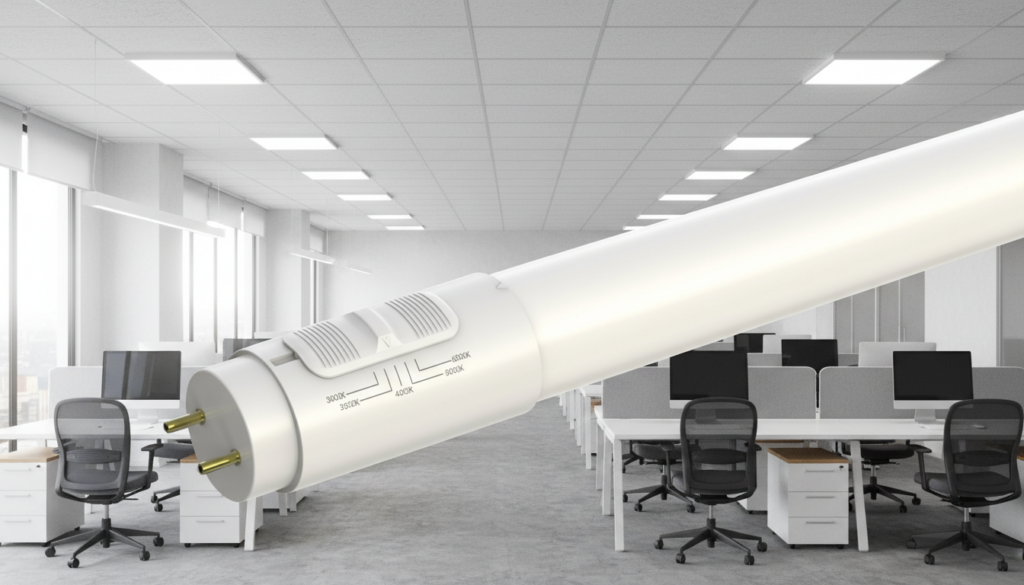
Here’s the ROI breakdown for a typical 50,000 sq ft commercial building:
| Cost Category | Before (Fluorescent) | After (LED) | Annual Savings |
| Energy Cost | $38,000/yr | $12,000/yr | $26,000 |
| Maintenance | $8,500/yr | $1,500/yr | $7,000 |
| Lamp Replacement | $4,200/yr | $0/yr | $4,200 |
| Total Annual Savings | $37,200 | ||
| Upgrade Cost (after rebates) | $55,000 | ||
| Payback Period | 1.5 years |
Pretty compelling. And that’s a conservative estimate.
What Makes Energy-Efficient Commercial Lighting Worth the Investment?
You’ve seen the savings numbers. But what actually makes energy-efficient commercial lighting perform so much better than traditional systems? It comes down to three things.
First, LED technology converts electricity to light far more efficiently. A quality commercial LED fixture delivers 130-180 lumens per watt. Compare that to fluorescent at 70-90 lumens per watt, or metal halide at maybe 60-80. You get more light from less power. Simple physics.
Second, heat output drops dramatically. Traditional fixtures waste 30-40% of their energy as heat. In air-conditioned buildings, that waste heat actually increases your cooling costs too. LED fixtures run cool. So your HVAC system works less hard in summer. Building managers in Toronto and Vancouver report 5-10% cooling cost reductions after commercial lighting upgrades. That’s a savings most people don’t even factor into their ROI calculations.
Third, light quality improves. This one’s underrated. Modern LED panels and troffers produce uniform, flicker-free light with CRI values above 80 (often 90+). Your staff can actually see better. Colours look accurate. Eye strain goes down. And you can tune colour temperatures from warm 3500K for reception areas to bright 5000K for task-heavy workspaces.
Energy-efficient commercial lighting also aligns with Natural Resources Canada’s energy efficiency goals and helps buildings earn points toward LEED and other green building certifications. For building owners chasing ESG targets, that matters.
Worth the investment? Look at it this way. Name another capital expenditure that pays for itself in under two years, improves working conditions, reduces maintenance headaches, and increases property value all at once. There isn’t one.
LED Retrofit for Commercial Buildings: What It Actually Costs
Let’s get specific about costs. Because “it depends” isn’t helpful when you’re building a budget.
Commercial lighting upgrades fall into two categories: retrofit and full replacement. A retrofit means you keep your existing fixture housing and swap the internals, like installing LED tubes into existing troffers. Full replacement means pulling old fixtures and installing new LED units. Both work. The right choice depends on your fixture condition and budget.
Typical cost ranges for LED retrofit for commercial buildings in Canada:
| Building Type | Cost per Sq Ft | 10,000 Sq Ft Estimate | 50,000 Sq Ft Estimate |
| Office | $1.50 – $3.00 | $15,000 – $30,000 | $75,000 – $150,000 |
| Retail | $2.00 – $4.00 | $20,000 – $40,000 | $100,000 – $200,000 |
| Warehouse | $1.00 – $2.50 | $10,000 – $25,000 | $50,000 – $125,000 |
| Parking Garage | $1.50 – $3.50 | $15,000 – $35,000 | $75,000 – $175,000 |
These numbers include fixtures, installation labour, and basic controls. They don’t include rebates, which can knock 30-50% off your total.
A few things affect your final number. Ceiling height matters because high bay installations require lifts and more labour time. Asbestos in older ceilings adds abatement costs. And the complexity of your lighting control upgrades, things like dimming, occupancy sensors, and daylight harvesting, will push the budget up but also increase your long-term savings.
Here’s the thing. The sticker price of LED retrofit for commercial buildings scares some building owners. But you’re not spending money. You’re moving it. The upgrade pays itself back through energy and maintenance savings, and everything after that payback point is pure profit on your operating budget.

How to Upgrade Commercial Office Lighting the Right Way
Office lighting is the most common commercial lighting upgrade project. And honestly, it’s one of the simplest. But “simple” doesn’t mean “just swap some bulbs.” There’s a process that gets you the best results.
Step 1: Audit your current lighting. Count fixtures, note types (2×4 troffers, 1×4 strips, recessed cans), check wattages, and map your floor plan. Most offices in Canada still run T8 or T12 fluorescent troffers. These are prime candidates for commercial lighting replacement.
Step 2: Determine your approach. For offices, you’ve got three options:
- Type A retrofit (plug and play): LED tubes that work with existing ballasts. Cheapest upfront but less efficient long-term because ballasts still consume power and eventually fail.
- Type B retrofit (ballast bypass): LED tubes wired directly to line voltage. Slightly more installation work but eliminates ballast losses and maintenance.
- Full fixture replacement: Remove old troffers, install new LED panels. Best light quality, highest efficiency, cleanest look. Costs more upfront.
For most office projects, Type B retrofit or full fixture replacement gives the best long-term value. The small cost difference pays back quickly through eliminated ballast failures.
Step 3: Select the right colour temperature. For offices, 4000K is the sweet spot. It’s neutral white, easy on the eyes for computer work, and keeps spaces feeling bright without the clinical harshness of 5000K. Reception areas and boardrooms can go warmer at 3500K.
Step 4: Plan your lighting controls. This is where how to upgrade commercial office lighting gets strategic. Occupancy sensors in meeting rooms, washrooms, and break rooms can add another 20-30% savings on top of your LED conversion. Daylight harvesting near windows adjusts artificial light based on natural light levels. And dimming capability lets you fine-tune light levels across different zones.
Step 5: Schedule installation. Office upgrades typically happen after hours or on weekends to minimize disruption. A 50,000 sq ft office usually takes 2-3 weeks with a crew of 4-6 electricians.
Industrial Lighting Upgrades: Warehouses, Plants & Distribution Centres
Industrial spaces are different. Higher ceilings, harsher environments, and longer operating hours mean industrial lighting upgrades deliver some of the biggest ROI in the commercial lighting world.
A typical warehouse running 400W metal halide high bays at 25-foot mounting heights can switch to 150W LED high bays and get equal or better light on the floor. That’s a 62% energy reduction per fixture. Multiply across 200+ fixtures running 16-20 hours a day, and the annual savings get serious fast.
But it’s not just about energy. Industrial LED fixtures handle the demands that destroy traditional lighting. Temperature swings from -40°C to +50°C? No problem for a quality CSA-certified LED high bay. Vibration from machinery? LED has no filaments or glass tubes to break. Dust and moisture? IP65 and IP66 rated fixtures handle that without flinching.
For Canadian warehouses and distribution centres, instant-on capability is a game changer. Metal halides need 15-20 minutes to warm up and restrike after a power interruption. LED turns on instantly. Full brightness. Every time. In a cold storage facility where you need light immediately, that’s not a luxury, it’s a safety requirement.
One more thing about industrial spaces. The DesignLights Consortium (DLC) qualification matters here because DLC-listed products qualify for most Canadian utility rebate programs. Always confirm your LED fixtures are DLC-listed before purchasing. It can save you thousands in rebate eligibility.
Business Lighting Retrofit: Step-by-Step Process
Whether you’re upgrading an office, warehouse, retail store, or mixed-use building, every successful business lighting retrofit follows the same basic process. Here’s how it works in practice.
Phase 1: Lighting Audit and Assessment (1-2 weeks)
A qualified lighting professional walks your facility, documents every fixture, measures current light levels, reviews your electrical panels, and identifies any code compliance issues. This isn’t optional. Skipping the audit is how buildings end up with the wrong fixtures in the wrong spots.
During the audit, you’ll also get a snapshot of your current energy consumption for lighting. This becomes your baseline for calculating savings and ROI.
Phase 2: Design and Specification (1-2 weeks)
Based on the audit, your lighting partner creates a design that meets Illuminating Engineering Society (IES) recommended light levels for each space type. They’ll specify fixture types, quantities, colour temperatures, and controls. This phase is where energy-saving lighting solutions get tailored to your specific building.
Phase 3: Rebate Application (2-4 weeks)
This step happens before installation, not after. Most provincial rebate programs require pre-approval. You submit your project details, show the expected energy savings, and wait for confirmation. In Ontario, the SaveOnEnergy program offers up to $2,000 per project for lighting upgrades plus per-fixture incentives. BC Hydro and Hydro-Quebec have similar programs.
Don’t skip this step. Seriously. Filing rebate paperwork after the fact usually means you miss out entirely. And these programs can cover 30-50% of your project cost.
Phase 4: Installation (2-6 weeks depending on size)
Licensed electricians handle the installation. For a commercial lighting replacement project, this typically means working in sections so the building stays operational. Night and weekend work is common for occupied spaces.
All work must comply with the Canadian Electrical Code (CSA C22.1) and local building codes. CSA-approved fixtures are mandatory in Canada. Not a suggestion. A requirement.
Phase 5: Commissioning and Verification (1 week)
After installation, light levels are measured to confirm they meet design specifications. Controls are programmed and tested. And a final energy consumption comparison verifies the projected savings are tracking correctly.
Smart Commercial Lighting Systems and Automation
Smart commercial lighting systems are where things get interesting. Beyond basic on/off switching, modern LED systems integrate with building automation platforms to deliver another layer of savings and control.
What does “smart” actually mean in practice? A few things. Networked fixtures that communicate with a central management system. Individual fixture control through software dashboards. Real-time energy monitoring. Automated scheduling. And integration with other building systems like HVAC and security.
For larger commercial buildings, smart lighting can add 15-25% savings on top of what LED alone provides. So if your LED conversion saved 60%, adding smart controls pushes total savings to 70-75% compared to your original system. That’s meaningful money.
The most common smart lighting features for commercial buildings include occupancy-based dimming (fixtures dim to 20% when spaces are empty), daylight harvesting (fixtures near windows adjust automatically), scheduled dimming (reduced output during cleaning hours), and space utilization reporting (data on which areas get used and when).
Is smart lighting right for every building? No. Small offices under 5,000 sq ft probably don’t justify the added cost. But for buildings over 20,000 sq ft with multiple zones and variable occupancy, the ROI on smart commercial lighting systems is strong.
Lighting Control Upgrades That Maximize Savings
You don’t need a full smart system to benefit from lighting control upgrades. Even basic controls make a big difference.
Occupancy sensors are the easiest win. Install them in meeting rooms, washrooms, storage areas, and corridors. They cut energy use in those spaces by 30-50%. Cost? Maybe $50-150 per sensor installed. Payback in months, not years.
Photocell sensors for exterior and perimeter lighting make sure outdoor fixtures only run when natural light drops below a set threshold. No more parking lot lights burning at noon because someone forgot to flip a switch.
Programmable timers handle areas with predictable schedules. Lobby lighting that dims after business hours. Warehouse high bays that reduce output during shift changes. Loading dock lights that activate only during scheduled deliveries.
And dimming controls, either manual or automated, let you dial back output when full brightness isn’t needed. A corridor doesn’t need the same light level at 2am that it needs at 2pm. Basic dimming can save another 10-20% beyond what LED conversion provides.
The key with lighting control upgrades is matching the control type to the application. Don’t over-engineer a janitor’s closet. But don’t under-spec a 200,000 sq ft distribution centre either.
Canadian Rebates and Incentive Programs for Commercial Lighting Upgrades
This is the part most building owners should read first. Because Canadian rebate programs can dramatically change the economics of commercial lighting upgrades.
Here’s a snapshot of major provincial programs:
| Province | Program | Key Benefits |
| Ontario | SaveOnEnergy | Up to $2,000/project + per-fixture incentives |
| British Columbia | BC Hydro Commercial | Custom incentives based on kWh saved |
| Quebec | Hydro-Quebec | Energy efficiency grants for commercial buildings |
| Alberta | Energy Efficiency Alberta | Rebates for qualified LED retrofits |
| Manitoba | Efficiency Manitoba | Custom commercial lighting programs |
| Nova Scotia | Efficiency Nova Scotia | Prescriptive and custom rebate paths |
How to maximize your rebate:
- Apply before you start the project. Most programs require pre-approval.
- Use DLC-listed fixtures. This is typically mandatory for rebate eligibility.
- Work with a contractor who has experience with the specific program’s paperwork.
- Document your baseline energy consumption with meter data or utility bills.
- Keep all invoices, product spec sheets, and installation records.
Some programs also offer financing options where the rebate is applied directly to a loan, reducing your out-of-pocket cost to nearly zero in some cases. The upgrade pays for itself through energy savings while the loan is active, and once it’s paid off, the savings go straight to your bottom line.
Frequently Asked Questions About Commercial Lighting Upgrades
1. How much do commercial lighting upgrades cost in Canada?
Costs typically range from $1.00 to $4.00 per square foot depending on building type, ceiling height, and the scope of controls included. A 25,000 sq ft office might cost $37,500-$75,000 before rebates. After provincial incentives, the net cost drops by 30-50%. Most buildings achieve full payback within 1.5 to 3 years through energy and maintenance savings.
2. What’s the difference between a lighting retrofit and a full replacement?
A retrofit keeps your existing fixture housings and replaces the internal components (lamps, drivers, ballasts) with LED technology. Full replacement removes old fixtures entirely and installs new LED units. Retrofits cost less upfront but may not achieve the same efficiency or light quality as purpose-built LED fixtures. For buildings with fixtures in good structural condition, a business lighting retrofit is often the most cost-effective path.
3. Do commercial LED lighting upgrades qualify for Canadian rebates?
Yes. Most provinces offer rebate programs specifically for commercial LED lighting upgrades. Ontario’s SaveOnEnergy, BC Hydro’s commercial programs, and Hydro-Quebec’s efficiency grants are among the largest. Eligibility typically requires using DLC-listed fixtures, applying before installation begins, and showing measurable energy savings compared to your baseline. Rebates can cover 30-50% of total project cost.
4. How long does a commercial lighting upgrade project take?
Timeline depends on building size and complexity. A small office (5,000 sq ft) might take 3-5 days. A 50,000 sq ft warehouse could take 3-4 weeks. Large multi-floor commercial buildings often take 4-8 weeks with phased installation to keep the building operational. The full process, from audit through commissioning, typically runs 8-12 weeks total.
5. Can I upgrade lighting without shutting down my building?
Absolutely. Most commercial lighting upgrades are designed to minimize disruption. Electricians work in sections, often during off-hours, weekends, or between shifts. In offices, a floor-by-floor approach is common, with each section completed in 1-2 days. Warehouses can be done bay-by-bay during lighter operational periods. Building shutdowns are almost never necessary for lighting projects.
Bottom Line
Commercial lighting upgrades aren’t a cost. They’re an investment that starts returning money within months and keeps delivering for decades. The math is clear: 50-75% energy savings, 70-80% maintenance reduction, and payback periods under three years.
And with Canadian rebate programs covering up to half the upfront cost, there’s really no financial reason to wait. Every month you delay is another month of inflated energy bills and unnecessary maintenance costs.
Votatec supplies CSA-certified, DLC-listed commercial LED fixtures built for Canadian conditions, from -40°C warehouse environments to temperature-controlled office spaces. We offer direct importer pricing, technical support, and contractor-friendly service across Canada.
Ready to see what commercial lighting upgrades can save your building? Request a free quote from Votatec and get a custom savings analysis for your facility.