










You’re reaching for your hair dryer. The bathroom floor is wet. Your hand touches the outlet and suddenly, your arm locks up. Your heart races. You can’t let go.
This isn’t a horror movie. It’s what happens when electricity finds a path through your body to the ground. And it kills around 30 Canadians every year.
Here’s the good news. A GFCI outlet would have stopped that scenario in less than 1/30th of a second. That’s faster than your heartbeat.
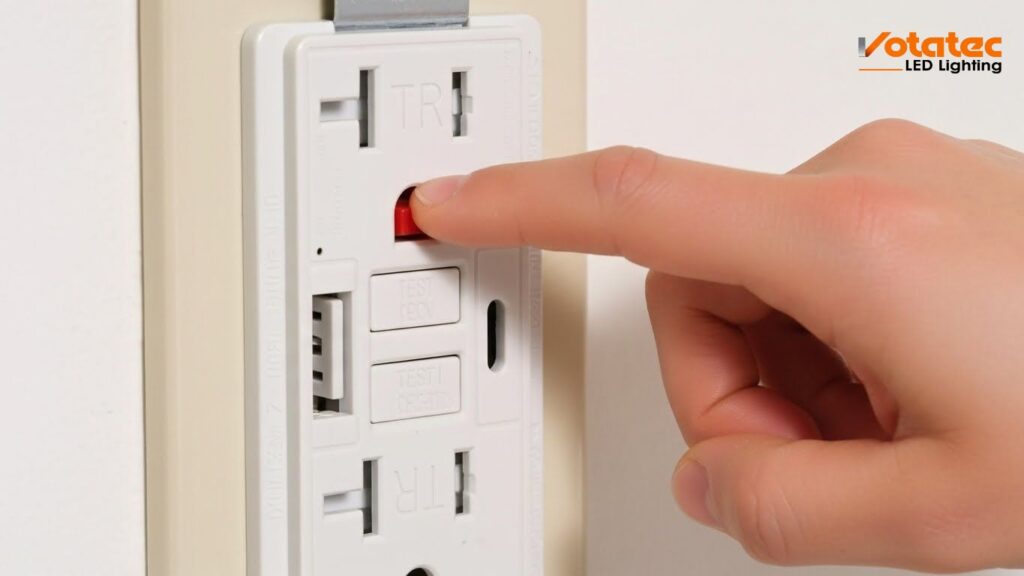
So what is a GFCI outlet exactly? It’s a special electrical receptacle that monitors the flow of current and cuts power instantly when it detects electricity going somewhere it shouldn’t, like through your body. GFCI stands for Ground Fault Circuit Interrupter. You’ve seen them. They’re the outlets with the little “Test” and “Reset” buttons, usually in bathrooms and kitchens.
The Canadian Electrical Code requires these devices in any location where water and electricity might meet. And for good reason. They’ve reduced electrocutions in homes by over 80% since becoming mandatory.
Whether you’re a homeowner wondering about those buttons on your bathroom outlet, a contractor installing receptacles to code, or a facility manager ensuring your building is compliant, this guide covers everything you need to know about GFCI protection in Canada.
Understanding the Ground Fault Circuit Interrupter
A Ground Fault Circuit Interrupter does exactly what its name suggests. It interrupts the circuit when it detects a ground fault.
But what’s a ground fault? Simple. It’s when electrical current escapes its intended path and flows through an unintended conductor to the ground. That conductor could be water. It could be a metal pipe. It could be you.
Under normal conditions, the current flowing out through the hot wire equals the current returning through the neutral wire. Perfectly balanced. A GFCI receptacle constantly monitors this balance. When current goes missing, even just 4-6 milliamps, the device knows something is wrong.
Think about it this way. If you’re holding a faulty appliance and current is flowing through your body to the ground, that current isn’t returning through the neutral wire. The GFCI notices the imbalance immediately. Power cut. You’re safe.
The technology has been around since the 1960s, but it didn’t become widespread in Canadian homes until the CEC started requiring it in bathrooms during the 1970s. Now it’s mandatory in dozens of locations throughout residential and commercial buildings.
How a GFCI Works to Protect You?
Understanding how a GFCI works helps you appreciate why these devices are non-negotiable in wet locations.
Inside every GFCI outlet is a small current transformer. Both the hot and neutral wires pass through this transformer. Under normal operation, the magnetic fields created by these wires cancel each other out because equal current flows in and out.
The moment current leaks to ground through another path, the magnetic fields become unbalanced. The transformer detects this imbalance and sends a signal to an internal mechanism. A spring-loaded contact opens instantly, breaking the circuit.
All of this happens in about 25 milliseconds. That’s 0.025 seconds.
The 4-6 Milliamp Threshold
Why 4-6 milliamps? Because that’s the threshold between “uncomfortable shock” and “potentially fatal shock.”
Here’s a rough breakdown:
- 1 milliamp: Barely perceptible tingle
- 5 milliamps: Mild shock, can let go
- 10-20 milliamps: Muscle contraction, may not be able to let go
- 50-100 milliamps: Ventricular fibrillation possible
- Over 100 milliamps: Heart stops
A standard circuit breaker trips at 15 or 20 amps. That’s 15,000 to 20,000 milliamps. Way too high to protect a human. The breaker protects the wiring from overheating. The GFCI protects you from electrocution.
The Purpose of a GFCI Outlet in Your Home or Building
The purpose of a GFCI outlet goes beyond just preventing shocks. These devices serve multiple critical functions in modern electrical systems.
Electrocution Prevention: The primary function. GFCIs save lives by cutting power before dangerous current levels can pass through a person’s body.
Fire Prevention: Ground faults can cause electrical fires when current arcs to grounded surfaces. By interrupting these faults quickly, GFCIs reduce fire risk.
Equipment Protection: Faulty appliances that would otherwise continue drawing power get shut down, preventing damage to the device and connected circuits.
Code Compliance: Buildings without proper GFCI protection fail electrical inspections. For property owners, this means potential fines and liability issues.
Insurance Requirements: Many insurance policies require code-compliant electrical systems. Missing GFCI protection could affect claims.
What Is a GFCI Electrical Outlet Used For in Commercial Settings?
Commercial and institutional buildings have even greater GFCI requirements than residential properties. What is a GFCI electrical outlet used for in these settings? Quite a lot, actually.
Restaurants and Commercial Kitchens: Every outlet near sinks, dishwashers, and food prep areas needs GFCI protection. Health inspectors check for this.
Healthcare Facilities: Patient care areas require GFCI outlets to protect vulnerable individuals. Hospitals and clinics must meet strict CSA Z32 standards.
Schools and Daycares: Anywhere children might contact water and electricity requires protection. Think bathrooms, science labs, and art rooms with sinks.
Manufacturing Facilities: Wet processes, washdown areas, and outdoor locations all need GFCI circuits.
Retail Spaces: Bathrooms, break rooms, and exterior outlets fall under commercial GFCI requirements.
For facility managers, keeping track of GFCI locations and testing schedules is part of regular maintenance protocols. Most building codes require documentation of monthly tests.
GFCI vs Regular Outlet: Key Differences
Understanding the GFCI vs regular outlet comparison helps you identify where protection exists and where it might be missing.
| Feature | Regular Outlet | GFCI Outlet |
| Ground Fault Protection | No | Yes |
| Test/Reset Buttons | No | Yes |
| Trip Threshold | N/A | 4-6 mA |
| Response Time | N/A | <30 ms |
| Cost | $2-5 | $15-25 |
| Installation Complexity | Basic | Moderate |
| Can Protect Downstream Outlets | No | Yes |
| Required Near Water | No | Yes |
| Indicator Light | Usually No | Often Yes |
One thing contractors appreciate about GFCI outlets is their ability to protect downstream receptacles. Wire the GFCI correctly, and every outlet after it on the same circuit gets ground fault protection too. This means you don’t need a GFCI device at every single location, just at the first outlet in the circuit.
But here’s the catch. If that upstream GFCI trips, everything downstream loses power. So placement matters.
What does a GFCI do that a regular outlet can’t? It thinks. Well, sort of. It constantly monitors and reacts. A regular outlet just sits there conducting electricity with no awareness of where that electricity is actually going.
Read more: GFI vs GFCI

Where GFCI Outlets Are Required by Canadian Electrical Code
The Canadian Electrical Code (CEC) specifies exactly where GFCI outlets are required. These requirements have expanded significantly over the years as the technology proved effective.
Residential Requirements
For homes, the CEC mandates GFCI protection in these locations:
Bathrooms: All receptacles. No exceptions. This has been required since the 1970s and remains the most critical location.
Kitchens: Receptacles within 1.5 metres of sink edges. Counter outlets serving the sink area definitely need protection.
Laundry Areas: Outlets within 1.5 metres of sinks or within the laundry room generally.
Garages: All receptacles except those dedicated to garage door openers in some jurisdictions.
Unfinished Basements: Receptacles in areas without finished floors and walls.
Outdoors: Every exterior receptacle, whether covered or not.
Crawl Spaces: Any receptacle in these areas.
Wet Bars: Similar to kitchen requirements, outlets near sinks need protection.
Boathouses and Pools: Everything near water. The requirements here are particularly strict.
Commercial and Industrial Requirements
Commercial requirements often exceed residential ones:
- All bathroom receptacles
- Kitchen and food prep areas
- Rooftops with HVAC equipment
- Exterior receptacles
- Loading docks and wet areas
- Any receptacle within 1.5 metres of a water source
- Temporary construction power
Provincial variations exist. Ontario’s OESC follows the CEC closely but may have additional requirements through the Electrical Safety Authority (ESA). Always verify local requirements with your provincial authority.
For more details on Canadian electrical standards, visit CSA Group or ESA Safe for Ontario-specific information.
AFCI vs GFCI Difference: Which Protection Do You Need?
The AFCI vs GFCI difference confuses a lot of people. Both protect against electrical hazards, but they address completely different problems.
GFCI (Ground Fault Circuit Interrupter):
- Protects against shock and electrocution
- Detects current leaking to ground
- Required in wet locations
- Trips at 4-6 milliamps imbalance
AFCI (Arc Fault Circuit Interrupter):
- Protects against electrical fires
- Detects dangerous arcing in wiring
- Required in bedrooms and living areas
- Trips when it senses arc signatures
Think of it this way. GFCI protects people. AFCI protects property.
Can you have both? Absolutely. Combination AFCI/GFCI devices exist and are increasingly common in new construction. Some jurisdictions now require dual protection in certain locations.
For bedrooms in newer Canadian homes, AFCI protection is mandatory at the breaker panel or receptacle. Bathrooms need GFCI. A bedroom with an ensuite bathroom might need both types of protection for different circuits.
Sound complicated? It can be. That’s why many contractors recommend consulting the latest CEC edition and local amendments before starting any electrical work.
How to Test Your GFCI Outlet
Testing takes about 10 seconds. Do it monthly.
Step 1: Plug in a lamp or radio. Make sure it’s on.
Step 2: Press the “Test” button on the GFCI outlet. You should hear a click.
Step 3: The lamp should turn off. If it doesn’t, the GFCI isn’t working properly.
Step 4: Press the “Reset” button. Another click. The lamp should turn back on.
That’s it. Simple.
If the GFCI doesn’t trip when you press Test, or if it won’t reset, the device needs replacement. GFCIs don’t last forever. Most manufacturers recommend replacement every 10-15 years, or immediately if they fail testing.
Some newer GFCI receptacles have self-testing features and indicator lights. A green light usually means protection is active. Red or no light means there’s a problem. Check the manufacturer’s documentation for your specific model.
For commercial buildings, document your monthly tests. Keep a log with dates, locations, and results. Inspectors and insurance adjusters appreciate good records.
Choosing the Right GFCI Receptacle for Your Project
Not all GFCI outlets are created equal. Here’s what to consider:
Amperage Rating: Match the circuit. 15A GFCIs for 15A circuits, 20A for 20A circuits. Using an undersized device is a code violation.
Weather Resistance: Outdoor locations need weather-resistant (WR) rated devices. These have enhanced corrosion protection.
Tamper Resistance: Required in many residential locations. These have built-in shutters that prevent children from inserting objects.
Self-Testing: Newer models automatically test themselves and indicate failures. Worth the extra cost for critical locations.
Indicator Lights: Helpful for quick visual confirmation that protection is active.
CSA Certification: Mandatory for Canadian installations. Look for the CSA or cUL mark.
At Votatec, we stock CSA-certified GFCI receptacles suitable for residential, commercial, and industrial applications. Our technical team can help you select the right device for your specific requirements.
Frequently Asked Questions About What Is a GFCI Outlet
What is a GFCI outlet and why do I need one?
A GFCI outlet is a Ground Fault Circuit Interrupter receptacle that monitors electrical current and cuts power instantly when it detects current flowing through an unintended path, like your body. You need them in any location where water and electricity could meet because they prevent electrocution. The Canadian Electrical Code requires them in bathrooms, kitchens near sinks, garages, outdoors, and other wet locations.
How often should I test my GFCI outlets?
Test your GFCI outlets monthly using the built-in Test and Reset buttons. Press Test, confirm the power cuts off, then press Reset to restore power. If a GFCI fails to trip during testing or won’t reset, replace it immediately. Most GFCIs last 10-15 years before needing replacement.
Can one GFCI outlet protect multiple receptacles?
Yes. When wired correctly, a single GFCI outlet can protect all downstream receptacles on the same circuit. This is called “feed-through” protection. The GFCI must be the first device in the circuit, and the downstream outlets connect to its “Load” terminals. If the GFCI trips, all protected downstream outlets lose power too.
What’s the difference between GFCI outlets and GFCI breakers?
GFCI outlets install at individual receptacle locations and protect that outlet plus any downstream outlets. GFCI breakers install in the electrical panel and protect the entire circuit. Breakers cost more but provide whole-circuit protection from one location. Outlets are easier to test and reset without visiting the panel. Both provide the same 4-6 milliamp ground fault protection.
Why does my GFCI outlet keep tripping?
Frequent GFCI tripping usually indicates a ground fault somewhere on the circuit. Common causes include moisture in outdoor outlets, damaged appliance cords, faulty appliances, or deteriorating wiring insulation. Start by unplugging all devices on the circuit and resetting. Plug items back in one at a time to identify the culprit. If the GFCI trips with nothing plugged in, you likely have a wiring issue that requires an electrician.
Protect Your Property with Quality GFCI Products
Electrical safety isn’t optional. The right GFCI protection keeps your family, employees, and tenants safe from shock hazards while ensuring code compliance.
Votatec supplies CSA-certified GFCI outlets for residential, commercial, and industrial applications across Canada. From basic bathroom receptacles to weather-resistant outdoor units, we stock the products electrical professionals trust.
Browse our complete GFCI outlet collection or contact our technical team for help selecting the right protection for your project.
View GFCI Products at Votatec