










 (+1) 905 597 5955


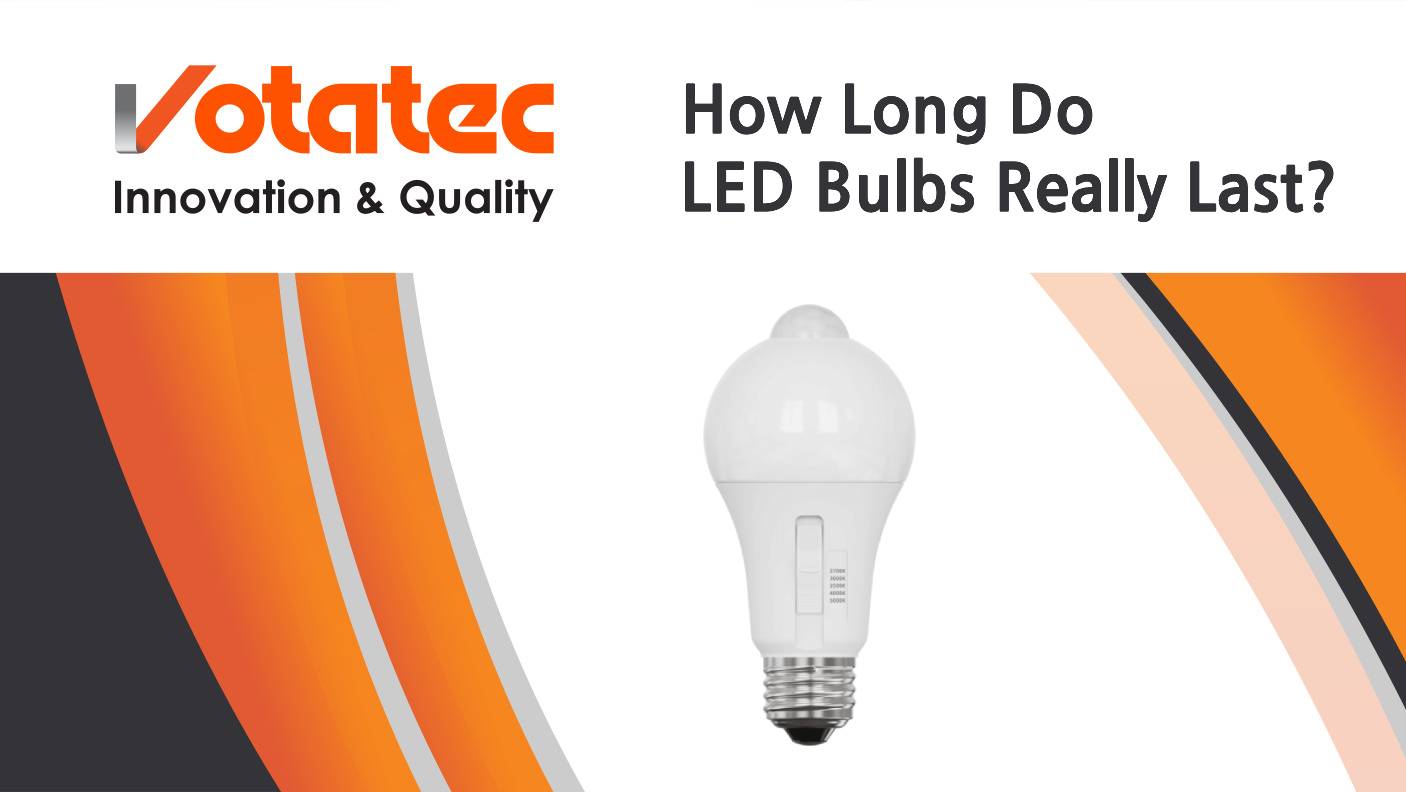

“LED bulbs last 25,000 hours!” You’ve seen these claims and wondered if they’re true. So how long do LED bulbs really last, and what affects their actual lifespan in real-world conditions?
Understanding LED lifespan involves more than package numbers. Usage patterns, quality differences, and specific LED types all influence longevity. This guide reveals the truth about LED lifespan, answers questions like “do LED light bulbs expire if not used,” and helps you understand what to expect from your LED lighting fixtures investment.
Understanding LED Lifespan Ratings
Before answering how long LED bulbs really last, we need to understand how manufacturers measure LED lifespan, because it’s different from what you might expect.
What Does “25,000 Hours” Actually Mean?
When you see “25,000 hours” on an LED bulb package, this represents the rated lifespan, but it doesn’t mean the bulb suddenly stops working at that point. Unlike incandescent bulbs that burn out abruptly when the filament breaks, LEDs experience gradual light output degradation over time.
The industry measures this using something called L70 lumen depreciation. That’s a fancy way of saying: the rated lifespan is when the bulb puts out 70% of its original brightness. According to the Illuminating Engineering Society (IES), this is the standard method for rating LED life.
Here’s what this means in practice:
- A 25,000-hour LED rated at L70 will still function after 25,000 hours
- At 25,000 hours, it will emit approximately 70% of its original brightness
- The bulb may continue working for thousands of additional hours, just with reduced output
- Complete failure typically occurs much later
This gradual degradation is actually an advantage because you can often continue using the LED well beyond its rated lifespan, especially in applications where maximum brightness isn’t critical.
How Manufacturers Calculate LED Lifespan?
LED manufacturers don’t run every bulb for 25,000 hours to verify the rating, that would take nearly three years of continuous operation. Instead, they use accelerated life testing and predictive modeling:
Accelerated Testing Methods:
- Testing LEDs at elevated temperatures to accelerate degradation
- Measuring lumen output at various intervals
- Recording data on LED chip performance and driver reliability
- Using statistical models to project long-term performance
LM-80 and TM-21 Standards:
- LM-80 is the approved method for measuring lumen maintenance of LED packages
- TM-21 uses LM-80 data to project long-term lumen depreciation
- These industry standards ensure consistency in lifespan ratings
- Quality manufacturers like Votatec follow these rigorous testing protocols
For Canadian consumers and businesses, choosing LED bulbs from manufacturers who follow LM-80/TM-21 testing protocols ensures the rated lifespan is based on scientific data rather than marketing exaggeration.
Converting Hours to Years of Real Use
Understanding rated hours is easier when you convert them to years of actual use. The conversion depends on how many hours per day you operate the lights:
25,000-Hour LED Lifespan:
- 3 hours/day (typical bedroom or living room): approximately 23 years
- 5 hours/day (frequently used rooms): approximately 14 years
- 8 hours/day (commercial office lighting): approximately 8.5 years
- 12 hours/day (retail or hospitality): approximately 5.7 years
- 24 hours/day (security or always-on applications): approximately 2.8 years
50,000-Hour LED Lifespan:
- 3 hours/day: approximately 45 years
- 8 hours/day: approximately 17 years
- 24 hours/day: approximately 5.7 years
For most Canadian households, a quality 25,000-hour LED bulb will outlast typical homeownership duration in rooms with moderate use.
How Long Do LED Lights Last Compared to Incandescent Bulbs?
To truly appreciate LED longevity, let’s examine how long do LED lights last compared to incandescent and other traditional lighting technologies commonly used in Canadian homes and businesses.
Incandescent Bulbs: The Short-Lived Standard
Average Lifespan: 1,000 hours (approximately 1 year at 3 hours/day)
Traditional incandescent bulbs work by heating a tungsten filament until it glows. This process is inherently inefficient and causes the filament to gradually evaporate, eventually breaking and causing complete failure.
LED vs Incandescent Comparison: When examining how long do LED lights last compared to incandescent technology, the difference is dramatic:
- LEDs last 25-50 times longer than incandescent bulbs
- A single LED replaces 25-50 incandescent bulbs over its lifetime
- Eliminates frequent bulb replacement hassles
- Reduces maintenance labor significantly
Compact Fluorescent Lamps (CFLs)
Average Lifespan: 8,000-15,000 hours (approximately 7-14 years at 3 hours/day)
CFLs represented a significant improvement over incandescent technology but have several lifespan limitations. Frequent on-off cycling significantly reduces CFL lifespan, making them poorly suited for closets, bathrooms, or areas with motion sensors.
LED vs CFL Comparison:
- LEDs last 2-6 times longer than CFLs
- LEDs aren’t affected by frequent switching
- LEDs reach full brightness instantly
- LEDs contain no mercury
Halogen Bulbs
Average Lifespan: 2,000-4,000 hours (approximately 2-4 years at 3 hours/day)
Halogen bulbs are improved incandescent technology with a halogen gas fill that allows higher operating temperatures. While they produce excellent color rendering, their lifespan remains limited.
LED vs Halogen Comparison:
- LEDs last 8-25 times longer than halogen bulbs
- LEDs generate far less heat
- LEDs offer similar color quality with CRI 90+ options
- important for recessed downlights where heat builds up
The True Cost Advantage
Understanding how long do LED lights last compared to incandescent and other traditional technologies reveals significant advantages beyond just replacement frequency. Over a 25,000-hour period:
- Incandescent: 25 bulb replacements required
- Halogen: 8-12 bulb replacements required
- CFL: 2-3 bulb replacements required
- LED: Typically zero replacements required
How Long Do LED Ceiling Lights Last?
LED ceiling lights – including recessed pot lights, flush mount fixtures, and ceiling panels – are among the most popular applications in Canadian homes and businesses. But how long do LED ceiling lights last compared to standard LED bulbs?
Integrated vs Replaceable LED Ceiling Fixtures
Integrated LED Fixtures: Modern LED ceiling lights often feature integrated LED modules where the LED components are permanently built into the fixture. These typically offer:
- Lifespan: 50,000-100,000 hours
- Duration: 15-30+ years in residential use
- Advantage: Optimized thermal management
- Consideration: Entire fixture replacement when LEDs eventually degrade
Replaceable LED Bulb Fixtures: Traditional ceiling fixtures that accept standard LED bulbs:
- Lifespan: 15,000-50,000 hours (depending on bulb quality)
- Duration: 10-25+ years in residential use
- Advantage: Individual bulb replacement capability
- Consideration: Requires periodic bulb replacement
Why LED Ceiling Lights Often Last Longer
When asking how long do LED ceiling lights last, it’s important to understand that ceiling-mounted LEDs often exceed standard bulb lifespans due to:
Better Heat Dissipation:
- Ceiling mounting promotes natural convection cooling
- Heat rises away from the fixture
- Better air circulation than enclosed table lamps
- Reduced thermal stress extends LED life
Quality Installation:
- Professional installation ensures proper ventilation
- Correct fixture selection for application
- Appropriate spacing and clearances
Votatec’s LED ceiling lights are engineered with thermal management systems that maximize lifespan, often exceeding 50,000 hours in typical Canadian residential applications.
How Long Do LED Light Strips Last?
LED strip lights have become increasingly popular for accent lighting, under-cabinet illumination, and decorative applications. But how long do LED light strips last compared to traditional LED bulbs?
LED Strip Lifespan Factors
Typical LED Strip Ratings:
- Quality strips: 30,000-50,000 hours
- Budget strips: 15,000-25,000 hours
- Commercial-grade: 50,000-70,000 hours
When examining how long do LED light strips last, several unique factors come into play:
Heat Accumulation:
- LED strips generate heat along their entire length
- Adhesive backing can trap heat against mounting surfaces
- Inadequate heat dissipation accelerates degradation
- Aluminum channel mounting significantly improves lifespan
Power Supply Quality:
- External drivers/transformers affect overall system life
- Quality power supplies prevent voltage fluctuations
- Undersized power supplies cause premature failure
- Proper power supply sizing is critical
Installation Environment:
- Under-cabinet installations typically provide good cooling
- Enclosed cove lighting requires ventilation considerations
- Outdoor-rated strips needed for exterior applications
- Waterproof ratings (IP65, IP67) for wet locations
Maximizing LED Strip Longevity
To ensure your LED strips reach their rated lifespan:
- Install in aluminum channels for heat dissipation
- Use properly sized power supplies (never exceed 80% capacity)
- Ensure adequate ventilation in enclosed installations
- Choose appropriate IP ratings for your environment
- Select quality strips with good thermal management
Votatec LED strip products include detailed installation guidelines and properly matched power supplies to ensure maximum lifespan in Canadian applications.
Do LED Light Bulbs Expire If Not Used?
One common question about LED longevity is: do LED light bulbs expire if not used? This is an important consideration for bulk purchases, emergency lighting, or seasonal decorative lights.
Shelf Life vs Operating Life
LED bulbs have two different lifespan considerations:
Operating Life:
- The 25,000-50,000 hour ratings discussed earlier
- Applies to actual powered operation time
- Subject to heat and electrical stress during use
Shelf Life:
- How long LEDs last in storage before use
- Much longer than operating life
- Different degradation mechanisms
What Happens to LEDs in Storage?
So do LED light bulbs expire if not used? The short answer is: not in any practical timeframe. However, some gradual changes do occur:
Capacitor Aging:
- Electrolytic capacitors in LED drivers can degrade over time
- Typically maintain functionality for 10-15+ years in storage
- Temperature and humidity affect capacitor shelf life
- Quality LEDs use longer-lasting capacitor designs
LED Chip Stability:
- LED semiconductor chips are extremely stable in storage
- Minimal degradation when unpowered
- Can remain viable for decades
- Not significantly affected by storage time
Connection Integrity:
- Solder joints and connections remain stable
- Corrosion only in extreme humidity conditions
- Proper packaging prevents environmental exposure
Practical Storage Recommendations
While LED light bulbs don’t truly expire if not used, proper storage maximizes longevity:
Storage Best Practices:
- Keep in original packaging to prevent physical damage
- Store in cool, dry environment (avoid extreme temperatures)
- Avoid high-humidity storage areas
- Keep away from direct sunlight
- Protect from dust and moisture
Expected Shelf Life:
- Quality LEDs: 10-15+ years unopened storage
- After opening: Use within 5-10 years for optimal performance
- Emergency/seasonal lights: Test annually even if unused
When to Replace Stored LEDs: Replace stored LED bulbs if you notice:
- Visible corrosion on base or connections
- Packaging shows signs of moisture damage
- Bulbs were stored in extreme conditions
- Storage exceeds 15+ years
For Canadian homes keeping emergency backup bulbs or seasonal decorative lighting, LED technology offers excellent shelf stability. Unlike batteries that discharge or CFLs that can develop starting problems, LEDs stored properly will function reliably even after years in storage.
Factors That Affect Real-World LED Lifespan
Rated hours give you a baseline. But several real-world factors determine how long your LEDs actually last in Canadian conditions.
Operating Temperature and Heat
Heat is the number one enemy of LED longevity. Every 10 degrees C above the ideal (25 degrees C) can cut lifespan by 10-30%. That’s significant.
Enclosed fixtures trap heat. Poor ventilation speeds up degradation. And hot attics in summer can cook recessed lighting from above.
But here’s the upside for us Canadians: cold weather actually helps LEDs. They run more efficiently in the cold. So those outdoor fixtures perform better through most of our year.
What to do about it:
- Use LEDs rated for enclosed fixtures where applicable
- Make sure there’s proper ventilation
- Votatec LED bulbs feature aluminum heat sinks designed for Canadian applications
Power Quality
The electronic driver inside every LED bulb converts AC to DC power. Voltage spikes, sags, and harmonic distortion all stress these components.
Canada’s electrical grid is generally stable, but rural areas can see more fluctuations. Choose LEDs with wide input voltage ranges and consider surge protection for valuable installations.
Usage Patterns
Different applications put different stress on LEDs:
- Low-stress (ambient lighting in climate-controlled rooms): maximum lifespan
- High-stress (fully enclosed outdoor fixtures, hot environments): reduced lifespan
- LED strips without proper heat management fall into the high-stress category
LED Quality
Not all LEDs are created equal. Look for these quality indicators:
- Brand reputation and track record
- CSA certification for Canadian electrical standards
- Energy Star qualification for verified efficiency
- Proper thermal design (aluminum heat sinks, not just plastic)
- Quality driver components
Votatec LED bulbs use quality components and undergo extensive testing to meet or exceed rated lifespan in real Canadian conditions. That’s backed by our 5-year warranty.
Signs Your LED Bulb Is Reaching End of Life
Unlike incandescent bulbs that burn out suddenly, LEDs give warning signs as they age.
Gradual Dimming
The most common sign of LED aging is progressive light output reduction over thousands of hours.
What to watch for:
- Noticeably reduced brightness compared to newer bulbs
- Dark areas in previously well-lit spaces
- Color shift toward cooler or warmer temperatures
Flickering or Strobing
As LED drivers age or fail, you may notice:
- Occasional flickering becoming more frequent
- Brief flashing when first turned on
- Persistent strobing or rapid flickering
One thing to note: sudden flickering in a previously stable LED might be a power supply issue, not the bulb. Check your dimmer switch compatibility before replacing the bulb.
Complete Failure
Eventually, most LEDs experience complete failure when the LED driver fails, typically well beyond the rated lifespan. With quality LEDs like those from Votatec, complete failure often occurs after 30,000-60,000+ hours for 25,000-hour rated bulbs.
Maximizing Your LED Bulb Lifespan
Following these best practices ensures you achieve maximum lifespan from your investment.
Choose the Right LED for the Application
Match specifications to conditions:
- Enclosed fixture rating for fully covered lights
- Wet/damp location rating for bathrooms and outdoors
- Appropriate color temperature for the space
- Sufficient lumens without over-specification
- Quality over price for hard-to-reach fixtures
Ensure Proper Installation
Installation best practices:
- Turn off power before installation
- Ensure fixtures are clean and well-ventilated
- Verify correct voltage and wattage ratings
- Secure connections to prevent arcing
- Use LED-compatible dimmers
- Follow manufacturer spacing recommendations
Maintain Appropriate Operating Conditions
Environmental control:
- Keep fixtures clean for optimal heat dissipation
- Ensure adequate ventilation in enclosed spaces
- Address moisture issues in damp locations
- Monitor for excessive heat buildup
Canadian climate strategies:
- Use cold-weather rated LEDs for outdoor applications
- Ensure proper sealing against winter moisture
- Consider thermal management in hot attic spaces
- Protect outdoor fixtures from ice and snow accumulation
Regular Inspection and Monitoring
Proactive maintenance:
- Periodically check for dimming or color changes
- Replace bulbs showing signs of degradation
- Monitor group installations for inconsistency
- Keep records of installation dates for large facilities
- Plan proactive replacements before complete failure
Votatec LED Longevity Commitment
At Votatec, we understand that LED longevity claims mean nothing without quality products and reliable support to back them up.
Quality Assurance
Votatec’s commitment to longevity:
- Rigorous testing following LM-80 and TM-21 protocols
- Quality components rated for Canadian electrical standards
- Thermal design optimized for real-world conditions
- Manufacturing quality control ensuring consistency
- CSA certification and Energy Star qualification
Warranty Protection
Our industry-leading 5-year warranty demonstrates confidence in LED lifespan:
- Comprehensive coverage for manufacturing defects
- Responsive Canadian-based customer support
- Hassle-free warranty claims process
- Replacement products readily available
Expert Support
Votatec provides:
- Technical guidance for optimal LED selection
- Application-specific recommendations
- Installation best practices for maximum lifespan
- Troubleshooting support for performance issues
- Contractor resources for commercial projects
Whether you’re upgrading residential lighting or planning a commercial retrofit, Votatec helps you maximize your LED investment through quality products and expert support.
📞 Request a Quote Today or call us at ( +1 ) 905 597 5955
Frequently Asked Questions About LED Lifespan
1. How long do LED bulbs really last in everyday use?
Quality LED bulbs last 15,000-50,000 hours depending on the specific product. For typical residential use (3-5 hours daily), this translates to 10-25+ years. Votatec LEDs are engineered to meet or exceed their rated lifespan when properly installed in appropriate applications.
2. How long do LED ceiling lights last compared to regular bulbs?
LED ceiling lights often last longer than standard LED bulbs due to better heat dissipation from ceiling mounting. Integrated LED ceiling fixtures can last 50,000-100,000 hours (15-30+ years), while ceiling fixtures with replaceable LED bulbs last 15,000-50,000 hours depending on bulb quality.
3. How long do LED light strips last?
Quality LED light strips last 30,000-50,000 hours when properly installed with adequate heat dissipation. Using aluminum mounting channels and properly sized power supplies significantly extends LED strip lifespan. Votatec LED strips include installation guidelines to maximize longevity.
4. Do LED light bulbs expire if not used?
LED bulbs don’t truly expire in storage. Quality LEDs maintain functionality for 10-15+ years in proper storage conditions. Store LEDs in cool, dry environments in original packaging. Unlike batteries, LED bulbs remain viable for decades when unpowered, making them ideal for emergency backup lighting.
5. Why did my LED bulb fail early?
Premature LED failure usually results from excessive heat, incompatible dimmers, poor power quality, or manufacturing defects. Ensure LEDs are rated for your specific application. Votatec’s 5-year warranty protects against manufacturing defects, and our support team can help diagnose issues.
The Bottom Line: How Long do LED Light Bulbs Last?
So, how long do LED bulbs really last? Quality LEDs consistently deliver 15,000-50,000+ hours of reliable operation, translating to 10-25+ years in most Canadian residential applications. When examining how long do LED lights last compared to incandescent bulbs, LEDs last 25-50 times longer. LED ceiling lights often exceed these expectations due to superior heat dissipation, while LED light strips can last 30,000-50,000 hours with proper installation. And for those wondering do LED light bulbs expire if not used, they remain viable for 10-15+ years in storage.
Ready to experience long-lasting LED performance? Votatec’s Canadian-certified LED bulbs deliver the longevity you expect, backed by industry-leading warranties and expert support. Whether you’re upgrading a single room or planning a facility-wide retrofit, we’ll help you maximize your LED investment.
Request Your Free Quote | Get Contractor Pricing