










 (+1) 905 597 5955


A Type A light bulb is the classic pear-shaped bulb used in most lamps and household fixtures. The “A” marks the A-series shape in the standard bulb-shape coding system, and the number after it (A19, A21) is the bulb’s diameter in eighths of an inch. So an A19 is 2.375 inches wide. Most Type A bulbs use an E26 medium screw base in North America, and they come in LED, incandescent, and halogen versions.
Here’s the quick size guide:
- A15 – compact size for appliances and decorative fixtures
- A19 – the most common household size (2.375 inches wide)
- A21 – a larger body for higher-output bulbs (2.625 inches wide)
- A25 – oversized, for high-wattage applications
LED Type A bulbs are now the top choice. They use up to 85% less energy than incandescent while lasting 15,000 to 25,000 hours. Ready to buy? Shop Type A LED bulbs.
At Votatec, we help buyers make informed lighting decisions. This guide covers the A-series light bulb, the A19 bulb meaning, how sizing works, what bases Type A bulbs use, how Type A compares to Type B, and how to pick the best option for your home or building.
What Is a Type A Light Bulb? The Complete Definition
A Type A light bulb is the most common and recognizable bulb shape on the market. When someone mentions a “standard household light bulb,” they are almost always referring to the A-shaped bulb.
Type A Bulb Definition
The Type A bulb definition refers to a bulb with an “arbitrary” or pear-shaped profile. The “A” indicates the shape, and the numbers that follow represent the bulb’s diameter using standard light bulb size codes.
Type A bulbs are widely used across homes, offices, hotels, retail environments, and commercial lighting due to their versatility and universal compatibility.

A-Series Light Bulb: What Does the “A” Really Mean?
The “A” in the A-series light bulb stands for arbitrary shape. This design was originally created because it spreads light evenly in all directions, making it an effective general purpose light bulb.
The shape is defined by:
- A rounded top
- A gradually narrowing middle
- A screw-in base
This familiar silhouette answers the question many homeowners ask:
“What is a Type A light bulb look like?”
It looks exactly like the traditional bulb found in everyday lamps and fixtures.
Understanding Light Bulb Size Codes (A15, A19, A21, etc.)
When exploring different light bulbs – especially within the A-series – you will notice a number that follows the letter “A.” This number is a crucial part of understanding bulb sizing because it indicates the diameter of the bulb using standardized light bulb size codes. Whether you’re replacing a lamp bulb, selecting a new LED option, or upgrading fixture lighting, knowing how these codes work ensures proper compatibility and performance.
How Light Bulb Size Codes Work
The sizing system used for A-series bulbs is simple once you understand the formula. The number after the “A” represents the bulb’s diameter in eighths of an inch. To convert this number into a physical measurement, you simply divide it by eight.
For example:
- A19: 19 ÷ 8 = 2.375 inches wide
- A21: 21 ÷ 8 = 2.625 inches wide
- A15: 15 ÷ 8 = 1.875 inches wide
This standardized approach makes it easier to determine which bulb best suits your fixture. Smaller bulbs like A15 are often used in appliances such as refrigerators, ceiling fans, or microwaves, while the A19 remains the most common choice for lamps and general household lighting. Larger options like A21 are typically used in fixtures requiring higher brightness levels or larger lamp housings.
Understanding light bulb size codes ensures you choose the right bulb every time. By matching the size code to your fixture requirements, you can avoid issues with fit, coverage, brightness, and overall compatibility.
A19 Bulb Meaning: The Most Common Household Bulb Size
The A19 bulb meaning is simple:
- “A” = the bulb’s arbitrary or pear-shaped profile
- “19” = 19/8 inches wide
The A19 bulb is the most widely used standard household light bulb across North America.
Where A19 Bulbs Are Commonly Used
- Table lamps
- Floor lamps
- Ceiling fixtures
- Bathroom lighting (non-damp)
- Bedroom and living room lights
- Office lamps
- Smart home fixtures
If you picture a “typical” bulb, you’re visualizing an A19.
A19 vs A21 Difference: What You Need to Know
Many homeowners find the A19 vs A21 difference confusing because both bulbs share the same familiar A-shaped profile. However, the two sizes serve different lighting purposes. The A19 bulb, which measures 2.375 inches in diameter, is the most common choice for everyday lighting. It delivers standard brightness with lower heat output, making it ideal for bedside lamps, table lamps, and typical ceiling fixtures.
The A21 bulb is slightly larger, with a 2.625-inch diameter, allowing it to produce higher light output – often used as a 100W replacement. Because it emits more brightness and generates slightly more heat, it’s better suited for larger fixtures or high-lumen applications where stronger illumination is needed. While both fall under the A-series category, selecting the right one depends on your fixture size and brightness preferences.
A19 vs A21 Comparison Table
| Feature | A19 Bulb | A21 Bulb |
| Diameter | 2.375 in | 2.625 in |
| Typical Use | Standard lamps | Larger or high-lumen fixtures |
| Brightness | Standard output | Higher brightness |
| Heat Output | Lower | Slightly higher |
Base Types: E26 and E27 Explained
Choosing the correct bulb base is essential for proper light bulb compatibility, especially when working with Type A bulbs. The two most common bases you’ll encounter are E26 and E27, both of which look almost identical but serve slightly different markets.
The medium base E26 bulb is the standard screw base used throughout North America. The code “E26” breaks down as follows:
- E stands for Edison screw base
- 26 refers to its 26-millimeter diameter
In contrast, the E27 base is primarily used in Europe and other international regions. It features a similar design, with a 27-millimeter diameter, making it nearly the same size as its E26 counterpart.
Because the difference is minimal, many E26 and E27 bulbs can fit interchangeably. However, for maximum safety and performance, it’s always best to follow your fixture’s specific requirements and manufacturer guidelines.
Types of Type A Bulbs: LED, Incandescent & Halogen
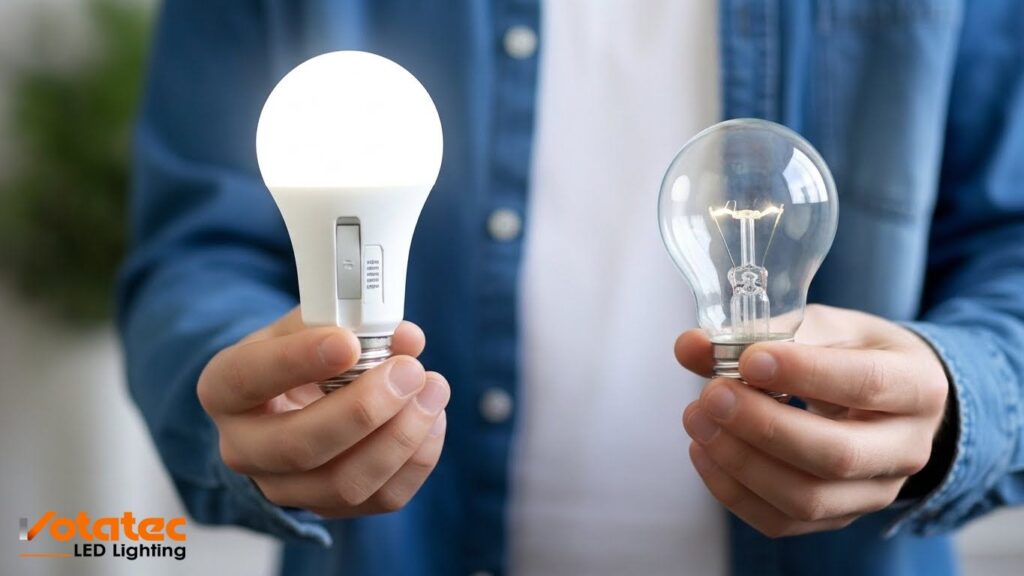
Ask “what is a Type A light bulb?” and you often want to know the technologies inside that A-shaped design. All Type A bulbs share the same silhouette, but they come in three main types: LED, incandescent, and halogen. Each has its own strengths, trade-offs, and best use.
1. LED Type A Bulb (Best Modern Choice)
The LED Type A bulb is the most energy-efficient option available today. LEDs use semiconductors to turn electricity straight into light, with very little waste.
Benefits of LED Type A bulbs:
- Cut energy use by up to 85% compared to incandescent (see US DOE)
- Last 10,000 to 25,000 hours, so you replace them far less often
- Run much cooler, which is safer and easier on fixtures
- Come in a wide range of colour temperatures, from warm white to daylight
- Many models support smart-home control, voice, and dimming
- No toxic materials and a lower carbon footprint
At Votatec, LED Type A bulbs are our top pick for almost every residential and commercial job, for performance and cost savings alike.
2. Incandescent Type A Bulb (Traditional Option)
The incandescent Type A bulb is the classic that ran the lighting world for decades. It makes light by heating a metal filament until it glows.
Pros:
- Warm, inviting light
- Excellent colour rendering that flatters interiors
Cons:
- Very short lifespan next to modern options
- Highly inefficient, since most energy leaves as heat
- Runs hot, which raises safety and comfort concerns
- Higher long-term cost from frequent replacement
3. Halogen Type A Bulb (Improved Incandescent)
Halogen bulbs are a refined incandescent, using halogen gas to lift efficiency and brightness a little.
Pros:
- Bright, crisp light
- Slightly more efficient than standard incandescent
Cons:
- Still far less efficient than LED
- Runs at very high temperatures
- Relatively short lifespan
Type A vs Type B Bulbs: What’s the Difference?
Type A bulbs are the familiar, pear-shaped general purpose light bulbs used in lamps, ceiling fixtures, and everyday household lighting. They typically use E26 or E27 medium bases and provide omnidirectional light, making them ideal for broad illumination.
In contrast, a Type B light bulb features a slim, bullet-shaped or candle-shaped design. These bulbs are primarily used for decorative purposes in chandeliers, wall sconces, ceiling fans, and ornamental fixtures. Type B bulbs usually come with E12 candelabra bases, and their light output is more focused and directional, contributing to ambiance rather than task lighting.
In summary, Type A bulbs are for general illumination, while Type B bulbs enhance decorative aesthetics with a stylish flame-like shape.
What Are the 3 Types of Light Bulbs?
When people ask, “What are the 3 types of light bulbs?” they’re usually referring to the three most common lighting technologies used in homes and businesses today. Despite the wide range of specialized bulbs on the market, most fall into one of these primary categories:
1. LED Bulbs – The Most Efficient Option
LED bulbs offer exceptional energy savings, long life spans, and versatile color temperatures. They are now the preferred choice for residential and commercial lighting due to their performance and low operating cost.
2. CFL Bulbs – Moderately Efficient
Compact Fluorescent Lamps use less energy than incandescents and last longer, though they contain small amounts of mercury and are gradually being replaced by LEDs.
3. Incandescent Bulbs – Least Efficient
Traditional incandescent bulbs produce warm light but consume significantly more energy and have very short lifespans.
Each of these technologies is available in Type A bulb shapes.
Light Distribution and Appearance: What Does a Type A Bulb Look Like?
A common question we hear is, “What does a Type A light bulb look like?” This bulb features the traditional, pear-shaped profile recognized in most homes. It includes a smooth, rounded top, a gently tapered middle, and a standard Edison screw base for simple installation. The curved A-shaped design allows the bulb to cast light evenly in all directions, creating full 360-degree illumination. This makes Type A bulbs ideal for table lamps, ceiling fixtures, and any area where broad, general lighting is needed.
Where Type A Bulbs Are Used
Residential Uses
- Table and floor lamps
- Ceiling fixtures and flush mounts
- Hallways and stairwells
- Bedrooms, living rooms, and family spaces
- Kitchens and dining areas
- Smart home lighting systems and automated fixtures
Commercial Uses
- Hospitality lighting in hotels and guest rooms
- Restaurant dining areas and ambient lighting
- Retail displays and product illumination
- Office desk lamps and task lighting
Appliance Uses (Primarily A15 Bulbs)
- Refrigerators and freezers
- Ovens and high-heat appliances
- Ceiling fans
- Microwaves and compact fixtures
Choosing the Right Color Temperature
Type A bulbs come in several colour temperatures:
| Colour temperature | Appearance | Best for |
|---|---|---|
| 2700K Warm White | Cozy and relaxing | Bedrooms and living rooms |
| 3000K Soft White | Gentle and warm | Hallways and kitchens |
| 4000K Cool White | Clean and neutral | Bathrooms and utility rooms |
| 5000K Daylight | Bright, energizing | Reading, working, or offices |
Brightness Levels: Understanding Lumens
Watts measure energy use. Lumens measure brightness. When you switch to LED, shop by lumens, not watts.
| Incandescent Equivalent | LED Lumens | LED Wattage |
|---|---|---|
| 40W | 450 lm | 6 to 8W |
| 60W | 800 lm | 8 to 10W |
| 75W | 1100 lm | 11 to 13W |
| 100W | 1600 lm | 14 to 20W |
Light Bulb Compatibility: How to Choose the Right Type A Bulb
Before you buy, check these six things:
1. Base Type
- Medium base E26 bulb
- E27 international base
- E12 for smaller fixtures
2. Bulb Size
- A19 for most fixtures
- A21 for brighter setups
- A15 for appliances
3. Fixture Wattage Limit
Never go over the fixture’s rating.
4. Dimmability
Confirm the bulb works with your dimmer switch.
5. Colour Temperature
Match the tone to the mood of the room.
6. Technology
Pick LED for long-term value and performance.
Why LED Type A Bulbs Are the Best Choice According to Votatec
At Votatec, we recommend LED Type A bulbs because they give the best mix of performance, efficiency, and long-term value. Next to traditional incandescent, the advantages are hard to ignore.
Key Benefits of LED Type A Bulbs
- Energy efficiency: up to 85% less electricity, which cuts monthly bills.
- Long lifespan: 10,000 to 25,000 hours, up to 25 times longer than incandescent.
- Cost savings: fewer replacements and lower energy use add up over time.
- Environmental benefits: no mercury, less heat, and a smaller carbon footprint.
- Better performance: instant-on with no warm-up, no flicker or buzz, and a wide range of colour temperatures.
Buying for a project or a building? We supply Type A LED bulbs in bulk. Shop Type A LED bulbs or request a quote.
Frequently Asked Questions About Type A Bulbs
1. What is a Type A light bulb?
A Type A bulb is a standard household light bulb with a classic pear shape used in most lamps and fixtures.
2. What is the difference between A19 and A21 bulbs?
The A19 vs A21 difference is mainly size. A21 bulbs are larger and typically provide more brightness.
3. What base does a Type A bulb use?
Most Type A bulbs use a medium base E26 bulb in North America.
International versions may use E27.
4. What is the Type A light bulb vs LED comparison?
Type A refers to shape, while LED refers to technology.
A bulb can be both Type A AND LED, such as an LED Type A bulb.
5. What is a Type B light bulb?
A Type B bulb is a candle-shaped bulb used mostly in chandeliers and decorative lighting, unlike the A-shaped general-purpose design.
How do I know if I have a Type A bulb?
Look at the shape and the code. A Type A bulb has the rounded, pear-like body and screws in with a threaded Edison base. The code is printed near the base: an “A” followed by a number (A19, A21). If it’s pear-shaped with a screw base, it’s a Type A.
Is a Type A bulb the same as E26?
Not quite. “Type A” is the bulb’s shape. “E26” is the base. Most Type A bulbs in North America use an E26 base, so the two often go together, but they aren’t the same thing. A Type A bulb can use a different base, and an E26 base is used on other shapes too.
Conclusion on What Is a Type A Light Bulb
Type A light bulbs remain the most common, most versatile option for homes and businesses. The familiar A-shaped design, wide compatibility, and range of sizes, especially the popular A19, make them ideal for general lighting. Whether you go LED for efficiency or keep a traditional incandescent, knowing your size codes, base types, and lumen levels helps you choose the right bulb every time.
At Votatec, we recommend LED Type A bulbs for long life, lower energy use, and better value. Ready to upgrade? Shop Votatec’s LED Type A bulbs or talk to a lighting specialist for project quantities.