












 (+1) 905 597 5955


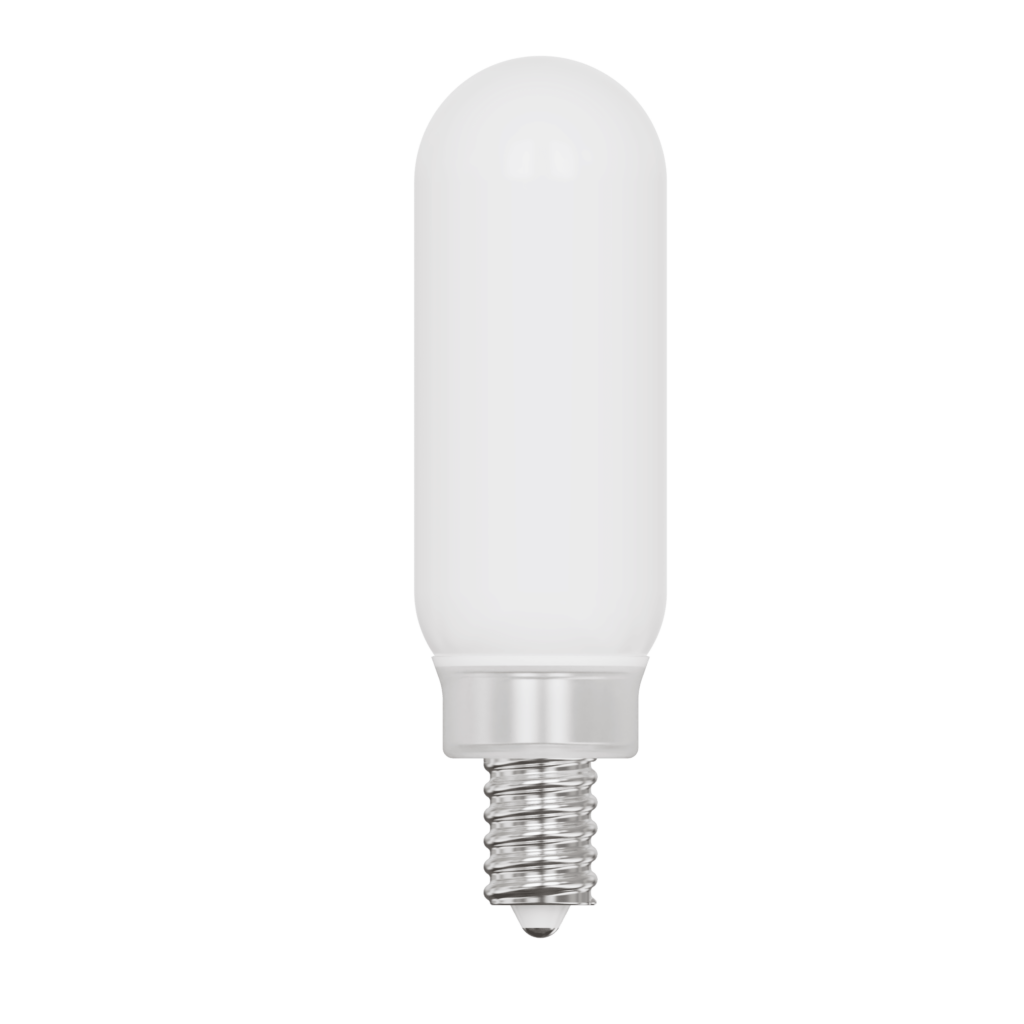


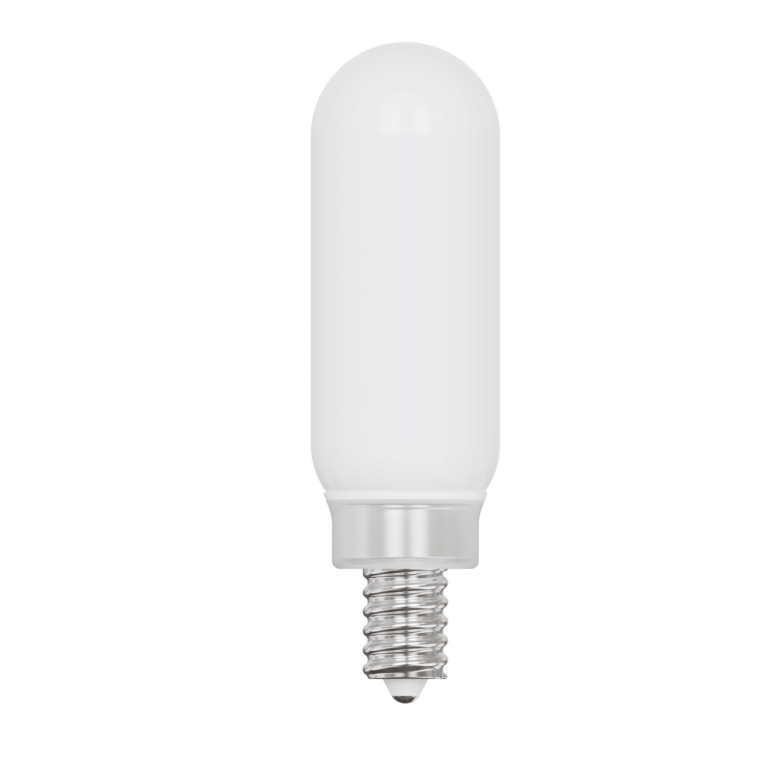
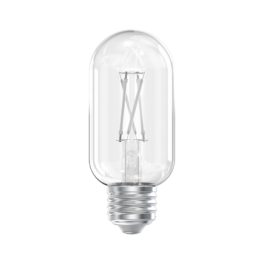
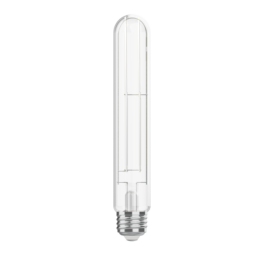
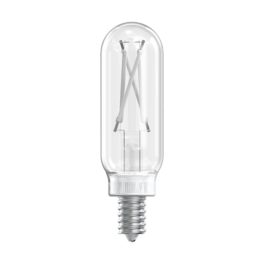
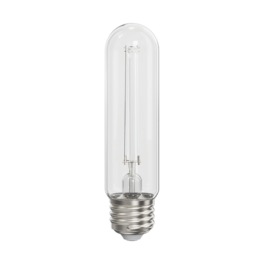
The T25 Milky LED filament bulb wraps a diffused milky glass around the filament, so there's no bright hot spot when the bulb sits in an open socket. At 0.98in across it clears narrow shades and tight canopies that a 1-3/8in candle bulb won't fit.
5.5W, 590 lumens at 3000K, CRI above 80, 360 degree beam, 120V, dimmable.
Glass body, anti-shock E12 base, cUL listed, IP20, three year warranty.
What does E12 mean on an LED bulb?
E12 is the base, not the bulb. The 12 is the screw thread diameter in millimetres, so an E12 bulb threads into any candelabra socket, the small one you find in chandeliers, sconces, vanity bars and ceiling fan light kits. It won't fit an E26 medium socket without an adapter. This bulb's E12 base is an anti-shock type, which keeps the glass and the base bonded when an installer over-torques it on a ladder.
Milky or clear glass: which T25 should you spec?
Pick milky when the bulb is visible and clear when it's the feature. The milky glass on this model diffuses the filament into an even glow, which is what you want in an open-socket vanity bar or a sconce at eye level. The clear T25 shows the filament coils, the decorative look, and reads brighter at 637 lumens against this one's 590. One trade-off worth knowing: milky is 3000K only, while the clear and white bodies come in 3000K, 4000K and 5000K.
When should you not use this bulb?
Don't put it in a sealed or fully enclosed fixture. The spec sheet rates it "Enclosed Fixture: No", because trapped heat cooks the driver long before the LED itself wears out, and driver heat is what kills these bulbs early. Same reason the operating window stops at 40C. Outdoors it's IP20, so it needs a dry, covered location.
Which dimmers has it been tested with?
Seven, and they're named rather than implied. Lutron DVCL-153PLH, S600-P, DV600-P15 and MACL-153M, plus Leviton 6681, 6674 and 6683. Standard build includes 0.5kV surge protection, which matters on older residential circuits feeding a chandelier off a wall dimmer.
For the full lumen table across all three T25 bodies, the dimension drawings and the compliance marks, open the Spec sheet in the Related documents panel, and pull the IES file if your designer needs photometric data for a layout. Send us your fixture count and socket type and we'll come back with a wholesale quote and a dimmer compatibility check.