













 (+1) 905 597 5955


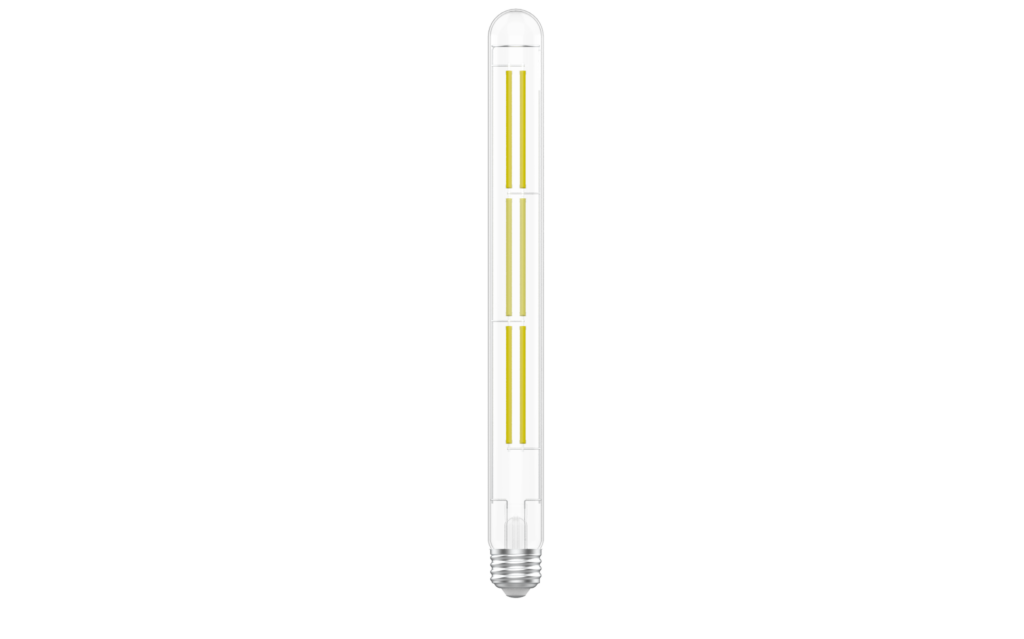




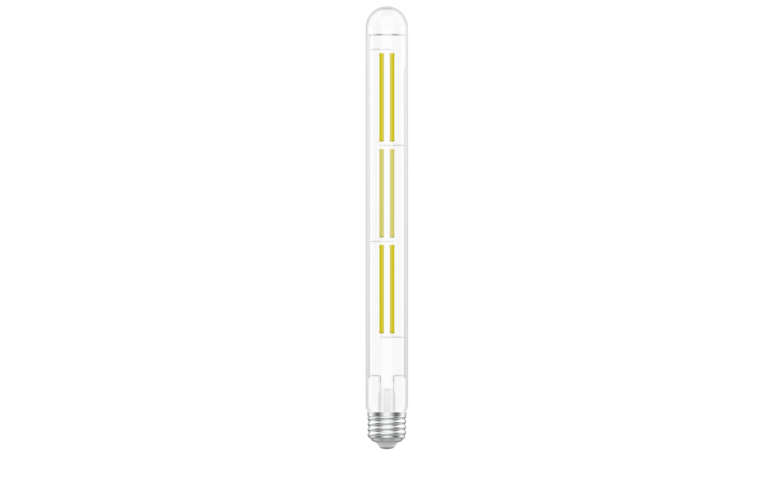
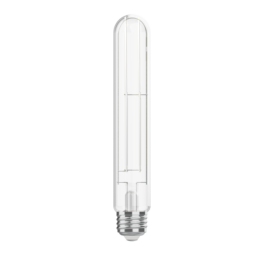
The T50 Filament LED is a long clear tube on a standard E26 screw base, 11-3/4 inches of visible filament for fixtures that put the lamp on show.
It draws 9W at 120V for 1,000 lumens, in 3000K or 4000K, with a 0.9 power factor and a 360° spread around the tube.
Clear glass, three vertical filament strips, and a published Leviton and Lutron dimmer list. Open fixtures only.
What are tubular light bulbs called?
Tubular bulbs are the T series, and the number is a shape code, not a wattage. This one measures 1-1/4 inches across and 11-3/4 inches long, so it reads as a slim vertical column rather than a round globe. Buyers ask for them as tube bulbs, tubular filament bulbs, or long Edison tubes. Same shape family, same E26 medium screw base as a standard A19.
When should you not use this bulb?
Don't put it in an enclosed fixture. The spec panel says so, and the reason is heat rather than light. A sealed globe or jar traps warm air around the lamp, and the driver in the base is what fails first, well before the LED strips do. Open-rated lamps are tested in free air near 25°C, so a closed housing runs them hotter than designed. Pendants, cages, open sconces and exposed-socket runs are where this one belongs.
Which dimmers are confirmed compatible?
Votatec publishes the tested list, which most bulb pages skip. Leviton 6681, 6674 and 6683. Lutron DVCL-153PLH, S600-P, DV600-P15 and MACL-153M. Specifying off that list heads off the flicker and low-end dropout generic dimmers throw on small filament lamps. At 9W the load is tiny, so the dimmer's minimum load rating matters far more than its maximum.
How does the light actually spread?
The 360° figure means around the tube, not in every direction. Goniophotometer testing puts peak intensity out the side of the lamp, square to the tube, and holds it even the whole way round within about 5%. Close to half the output goes up past the horizontal, which is what makes it work under an open pendant. Straight along the tube axis, output falls away sharply.
For the full candela distribution, open the IES file in the Related documents panel and drop it into your AGi32 or DIALux model. Send us your annual volume split by colour temperature and we'll come back with a wholesale quote and confirm which of the two is stocked.