










 (+1) 905 597 5955


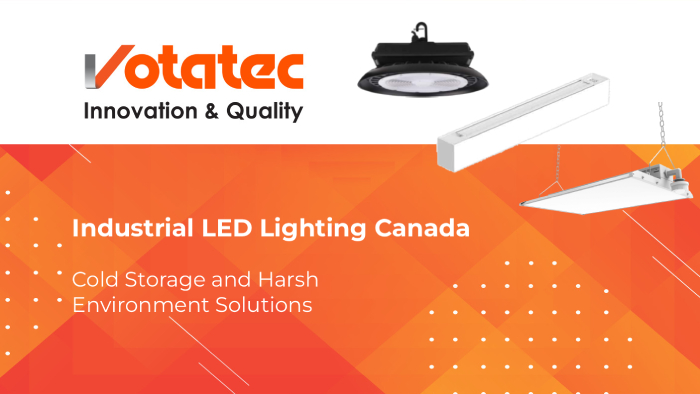

Cold storage and harsh sites break ordinary fixtures fast. The fix is purpose-built industrial LED lighting with low-temperature drivers, sealed IP-rated housings, and the toughness to survive frost, washdown, dust, and vibration. In a freezer at -30°C or a foundry full of grit, the fixture rating matters more than raw lumens. Pick the wrong one and you’re back on a lift within a year.
This guide covers what works in Canadian conditions. You’ll learn how to spec cold storage fixtures, what IP and impact ratings mean, which certifications unlock utility rebates, and how to choose industrial LED light fixtures that last. Votatec ships these from Toronto and Vancouver warehouses to contractors and facility teams across the country, so the advice here comes from real project specs, not a catalogue blurb.
What Is Industrial LED Lighting?
Industrial LED lighting is a class of solid-state fixtures engineered for factories, warehouses, cold rooms, and other demanding sites where standard commercial lights fail. These led industrial lights use rugged housings, thermal management, and drivers rated for temperature extremes, moisture, and mechanical stress. They replace older metal halide and fluorescent systems while cutting energy use by roughly 75%.
The category spans several fixture families:
- Industrial high bay LED lights for ceilings above 6 metres (warehouses, plants)
- Vapor-tight linear fixtures for wet, dusty, and cold locations
- Explosion-proof and hazardous-location units for classified areas
- Wall packs, flood lights, and area lights for yards and loading docks
- Industrial LED light bulbs such as corn-cob retrofits for legacy sockets
Each type answers a different problem. A distribution centre needs uniform high-bay coverage. A blast freezer needs a sealed fixture that starts cold and stays sealed. Matching the fixture to the environment is the whole game.
What’s New in Industrial LED Lighting
The 2026 story is smarter, tougher, and better rebated. Three shifts stand out for anyone spec’ing industrial led lighting canada projects this year.
First, integrated controls went mainstream. Motion sensors, daylight harvesting, and 0-10V dimming now ship built into many high bays instead of bolting on later. Canada’s smart-lighting segment is the fastest-growing part of the market, expanding at a 12-15% annual rate, per Grand View Research.
Second, efficacy keeps climbing. Fixtures pushing 150-200 lumens per watt are common, so you hit the same foot-candles with fewer fixtures and less wiring.
Third, the rebate rules tightened. The DesignLights Consortium began accepting its stricter V6.0 applications on 2026-01-05, and older V5.1 products get delisted on 2026-12-15. That transition changes which led industrial lighting products qualify for utility money, which we cover below.
Why Canadian Facilities Are Switching to LED
Old lighting is a slow leak on the operating budget. Metal halide lamps dim, flicker, and burn out. Fluorescent tubes hate the cold and drop output the moment temperatures fall. Swapping to industrial LED lighting stops that bleed and pays for itself in most buildings within 12 to 36 months.
The national picture backs this up. Natural Resources Canada estimates the country could save up to $1.3B a year by moving to energy-efficient lighting. That’s not a rounding error. It’s payroll, equipment, and margin.
Do Industrial LED Lights Save Energy?
Yes, and the gap is large. Industrial LED lighting saves energy by converting far more electricity into visible light and far less into waste heat. A typical LED high bay draws 100-200W where an old 400W metal halide fixture drew 450W or more with its ballast. That’s a 60-75% cut in lighting energy for the same or better brightness.
Three factors drive the savings:
- Higher efficacy – more lumens per watt, so lower wattage for equal light
- Instant full output – no 10-minute warm-up, no re-strike delay after a power blip
- Controls – occupancy sensors dim or kill lights in empty aisles
In cold storage the win is bigger. LEDs run cool, so your refrigeration system fights less heat from the lighting itself. Every watt of lighting heat removed is a watt the compressors don’t have to pump out.
Advantages and Benefits of Using LEDs for Industrial Lighting
People ask what the advantages of using LEDs for industrial lighting are, and what the benefits of using LEDs for industrial lighting look like in practice. They’re the same list, and it’s a strong one:
- Lifespan of 50,000+ hours – roughly 5 to 15 years of run time, so fewer lift rentals and replacements
- Cold-start performance – full brightness the instant power hits, even at -30°C
- Durability – no fragile filament or glass envelope to shatter under vibration
- Better light quality – high CRI and 4000K-5000K colour for accurate task visibility
- Lower maintenance – sealed fixtures shrug off dust and moisture
- Rebate eligibility – DLC-listed industrial LED light fixtures qualify for utility incentives
- Reduced HVAC load – less heat output in conditioned and refrigerated spaces
For a facility manager, the maintenance point often outweighs the energy one. Sending a crew up 12 metres to change a high bay lamp costs far more than the lamp. Cut those trips and the numbers move fast.
Cold Storage LED Lighting: Built for the Freeze
Cold storage is where cheap fixtures die. A freezer at -30°C will crack ordinary drivers, fog up warm-rated lenses, and trigger condensation that shorts the electronics. Purpose-built cold storage led lights for industrial applications solve this with sealed bodies and drivers designed to start and run in the cold.
Here’s what to check before you buy anything for a cooler, freezer, or blast cell.
Temperature Ratings and Low-Temperature Drivers
The driver is the heart of the fixture, and it’s the first thing to fail in the cold. Most freezer warehouses need fixtures rated to at least -30°C. For blast freezers and extreme rooms, look for units with drivers rated to -40°C, which handle both cold starts and continuous sub-zero running (eLEDLights guide).
A warm-rated fixture dropped into a freezer may light up on day one and then quit when the driver can’t cope with repeated cold cycling. Always read the operating-temperature line on the spec sheet, not just the IP rating.
IP Ratings for Coolers, Freezers, and Washdown
IP ratings tell you how well a fixture keeps out dust and water. In cold storage, condensation is the enemy, and the rating you need depends on where the fixture sits:
| Location | Recommended IP Rating | Why |
|---|---|---|
| Interior cooler aisles | IP65 | Lower moisture exposure |
| Freezers, defrost zones | IP66 or IP67 | High condensation, frost cycling |
| Dock doors, washdown areas | IP66 to IP69K | Direct water, sanitation spray |
An IP65 fixture is sealed against dust and low-pressure water. IP66 and IP67 step up for the frost and defrost swings inside a freezer. For food and beverage sites that hose everything down, IP69K handles high-pressure, high-temperature washdown.
Fixture Types for Cold Storage
Vapor-tight LED panels and linear fixtures are the standard for walk-in coolers and freezers. These low-profile, fully sealed units stop condensation from reaching the driver. A 2ft by 2ft vapor-tight panel rated for sub-zero use typically delivers 50 to 75 foot-candles and draws just 25-35W.
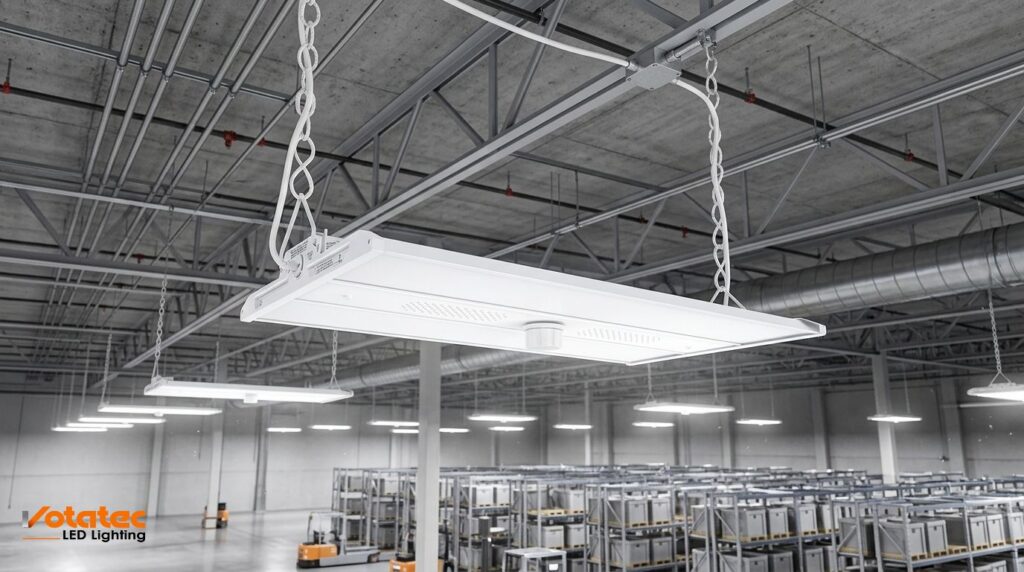
Votatec’s vapor tight LED fixtures are IP66-rated and stocked in 2ft, 4ft, and 8ft lengths for exactly these jobs, from food plants to cold storage to car washes. For tall freezer warehouses with racking, sealed industrial LED high bay lighting covers the vertical drop better than surface panels.
Harsh Environment LED Lighting Solutions
Cold is only one kind of harsh. Canadian industry runs foundries, mines, pulp mills, machine shops, and wet processing plants where fixtures face heat, grit, corrosion, impact, and explosive atmospheres. The right industrial LED lighting solutions are chosen by rating first and photometrics second.
Washdown and Water Ingress
For food, beverage, and pharmaceutical plants, sanitation means high-pressure hot-water spray. IP69K-rated enclosures withstand that washdown, which is why they’re standard in processing areas (LED Lighting Supply). Anywhere hoses run, treat IP66 as the floor and IP69K as the target.
Vibration, Impact, and Corrosion
Machine shops and plants shake. Forklifts clip fixtures. Debris flies. Harsh-environment industrial light fixtures LED builds should carry vibration and shock resistance plus an impact rating (IK grade) where tools, forklifts, or product can strike them.
Corrosion is the quieter killer. Salt, chemicals, and humidity eat standard aluminium and steel. Look for powder-coated or stainless housings and sealed gaskets in these settings.
Hazardous Locations
Some areas hold flammable gas, vapour, combustible dust, or ignitable fibres. These need explosion-proof fixtures rated for the classified zone, typically Class I Division 2 or ATEX/IECEx certified. Don’t guess here. A standard industrial LED light in a classified area is a code violation and a safety risk. Confirm the area classification with an electrical engineer first.
High Bay LED for Tall Industrial Ceilings
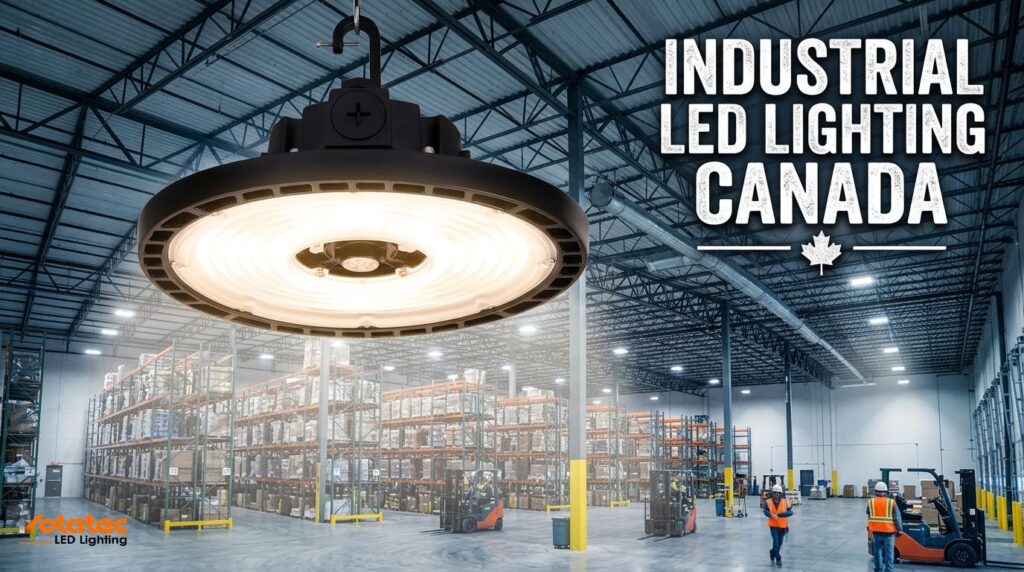
Can industrial high bay LED lighting cover a big plant properly? Yes, and it’s the workhorse of the category. Industrial high bay LED lights mount on ceilings from 6 to 15 metres and throw even, glare-controlled light down to the floor. They come in two shapes:
- UFO (round) high bays – compact, high-output, easy to install
- Linear high bays – wider spread, good for aisles and racking
Votatec’s linear high bay LED lights replace old T5/T8 and metal halide systems and cut lighting energy by about 75%, with instant-on output and no re-strike delay. For a full room design, our warehouse lighting application guide walks through layout, mounting height, and spacing.
How Big Is the LED Light Industry?
The LED light industry is large and still growing fast. Canada’s LED lighting market generated about USD 3,822.9M in revenue in 2025 and is projected to grow at an 8.4% annual rate from 2026 to 2033, according to Grand View Research. Some forecasts put the market at CAD 7.5-9.5B by the mid-2030s.
The industrial segment is a meaningful slice of that, driven by retrofits, new construction, and the shift to controls. For buyers, a growing market means more choice, better prices, and steady product improvement year over year. For led lighting for industrial factories, it also means older fixture lines get phased out, so buying DLC-current products protects your rebate eligibility.
Colour Temperature, CRI, and Light Levels for Industrial Spaces
Light quality decides whether a worker can actually see the task, and it’s the part buyers skip most often. Three numbers govern the result when you spec industrial LED lighting: colour temperature, colour rendering index (CRI), and foot-candles.
Colour temperature, measured in Kelvin, sets the tone of the light:
- 4000K (neutral white) – general warehouse, storage, and circulation areas
- 5000K (daylight) – assembly, inspection, and cold storage, where crisp, accurate colour helps
CRI measures how truthfully colours show under the light, on a 0-100 scale. Aim for 80+ CRI in general industrial areas and 90+ where colour matters, such as quality inspection or paint work. Cheap led industrial lights often skimp here, and it shows on the line.
Foot-candles set the actual brightness at the work surface. Use these IES-aligned targets:
| Task area | Target light level |
|---|---|
| Warehouse aisles, bulk storage | 20-30 foot-candles |
| General assembly, packing | 50 foot-candles |
| Fine inspection, detailed work | 75-100 foot-candles |
| Cold storage coolers | 50-75 foot-candles |
Getting these three numbers right is what separates a lighting design from a pile of fixtures. Any supplier worth using will map them to your floor plan before you buy.
Rebates, DLC Certification, and Canadian Standards
Money is on the table if your fixtures qualify. Most Canadian utility programs, including Ontario’s Save on Energy, BC Hydro, and Hydro-Québec, only pay incentives on products listed by the DesignLights Consortium (DLC Standard or Premium) or certified by ENERGY STAR.
A few points that trip people up:
- DLC is not the same as safety certification. You still need cUL, CSA, or equivalent listing for legal installation in Canada.
- V6.0 matters. With V5.1 delisting on 2026-12-15, confirm any fixture you buy is current so the rebate holds.
- Rebates are delivered locally. Natural Resources Canada links programs through its retrofit resources, but the actual payout comes from your provincial utility.
For a province-by-province breakdown, see Votatec’s guide to LED lighting rebates in Canada and the primer on what DLC certification means. On the design side, industrial layouts should follow the IES recommended practice for industrial lighting, ANSI/IES RP-7, which sets task-visibility and safety targets.
How to Choose Industrial LED Light Fixtures
Buying industrial LED lighting starts with the site, not the spec sheet. Work through this checklist before you order. It keeps you from buying fixtures that fail the site.
- Classify the environment first. Cold, wet, dusty, corrosive, high-vibration, or hazardous? This sets your minimum IP, impact, and temperature ratings.
- Check the operating temperature range. For cold storage, confirm -30°C or -40°C driver rating, not just the IP number.
- Match mounting height to fixture type. High bays for 6m+, linear or vapor-tight for lower and sealed spaces.
- Target the right light level. Use IES RP-7 foot-candle targets for the task, not guesswork.
- Confirm DLC or ENERGY STAR listing. No listing usually means no rebate.
- Verify safety certification. cUL or CSA for Canadian code compliance.
- Plan controls. Sensors and dimming add savings and are often rebated too.
- Ask for IES files and spec sheets. A real supplier hands these over so your electrician can lay out the room.
That last point separates wholesalers from box stores. When you send Votatec a fixture list, you get a wholesale quote, spec sheets, and IES files back, usually within 24 hours. Browse the full LED light fixtures range to start a spec.
A Note on “Rigid Industries” LED Lighting
Search results sometimes mix two very different things. Rigid Industries LED lighting refers to a brand of off-road, marine, and vehicle-mounted LED lights. That’s not the same as building-grade industrial LED lighting for warehouses and cold storage. If you’re lighting a facility, you want DLC-listed high bays, vapor-tight fixtures, and area lights, not automotive light bars. Rigid Industries LED lights serve trucks and equipment, while Votatec supplies the fixed, code-listed products that light Canadian plants and cold rooms.
Frequently Asked Questions
What are the advantages of using LEDs for industrial lighting?
The advantages of using LEDs for industrial lighting are lower energy use, longer life, and less maintenance. LEDs cut lighting energy by 60-75% versus metal halide, last 50,000+ hours, and start at full brightness even in the cold. They also produce less heat, run at high CRI for better task visibility, and qualify for utility rebates when DLC-listed. For most facilities the payback period is 12 to 36 months.
Can industrial high bay LED lighting be used in cold storage freezers?
Yes, but only if the fixture is rated for it. Standard high bays fail in freezers. For cold storage, choose sealed industrial high bay LED lights with a low-temperature driver rated to -30°C or -40°C and an IP66 or IP67 housing to handle condensation and frost. Vapor-tight linear fixtures are also common in walk-in coolers and lower freezer ceilings.
Can I reuse an LED strip from industrial lights?
Sometimes, but be careful. You can reuse an LED strip or module from industrial lights only if it matches the new fixture’s voltage, driver output, and connector type, and if it’s undamaged. Mismatched drivers can overdrive the strip and cut its life or create a fire risk. In most industrial retrofits it’s safer and rebate-friendly to install a complete, listed fixture rather than salvage strips from old led industrial lights.
Do industrial LED lights save energy compared to older systems?
Yes, significantly. Industrial LED lights save energy by drawing far less power for the same light output. A 150W LED high bay replaces a 400-450W metal halide fixture, a cut of about 60-75%. Add occupancy sensors and dimming and total lighting energy can drop even further. In cold storage there’s a bonus: cooler-running LEDs reduce the heat load your refrigeration has to remove.
What is new in industrial LED lighting for 2026?
What’s new in industrial LED lighting in 2026 is built-in controls, higher efficacy, and stricter rebate rules. Sensors and 0-10V dimming now ship inside many fixtures, efficacy of 150-200 lumens per watt is common, and the DLC’s V6.0 standard (with V5.1 delisting on 2026-12-15) is reshaping which products qualify for Canadian utility incentives. Smart-lighting demand is the fastest-growing part of the market.
The Bottom Line
Choosing industrial LED lighting for cold storage and harsh sites comes down to matching ratings to conditions:
- Cold storage: low-temperature drivers (-30°C to -40°C), IP66/IP67 sealing, vapor-tight fixtures
- Harsh sites: IP66 to IP69K, vibration and impact resistance, hazardous-location ratings where classified
- Rebates: DLC-listed or ENERGY STAR products, plus cUL or CSA for code
- Design: follow IES RP-7 light levels and get IES files from your supplier
Done right, industrial LED lighting lasts for years while cutting energy and maintenance. Get the rating wrong and you’re back on a lift.
Ready to spec a project? Send Votatec your fixture list or floor plan and get a wholesale quote, spec sheets, and IES files back, usually within 24 hours. Explore the full industrial LED light fixtures catalogue to get started.