














 (+1) 905 597 5955


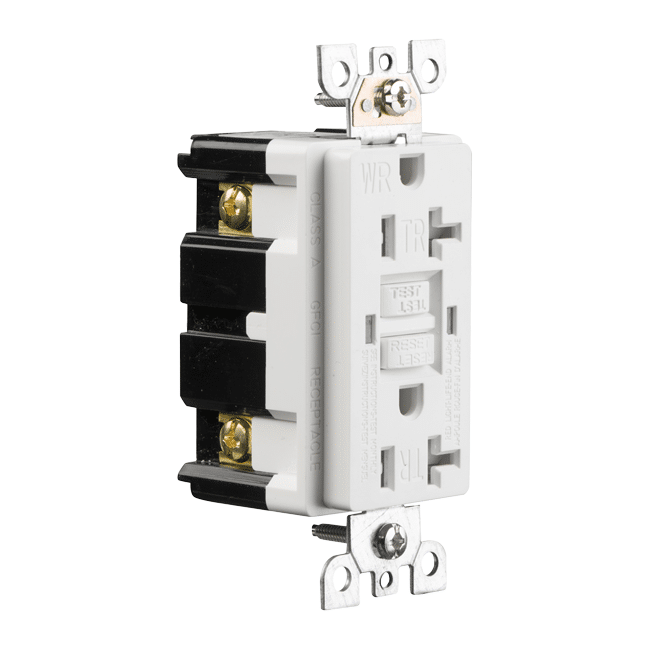
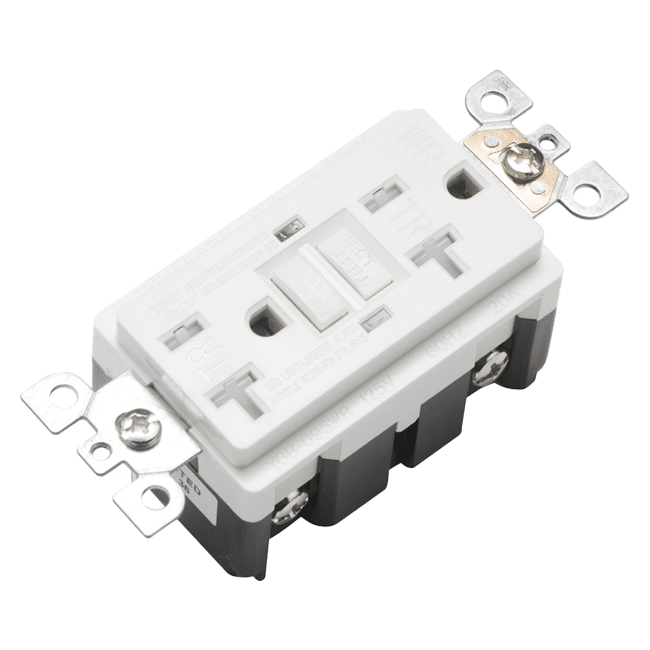



Is there a difference between an outdoor GFCI and an indoor GFCI?
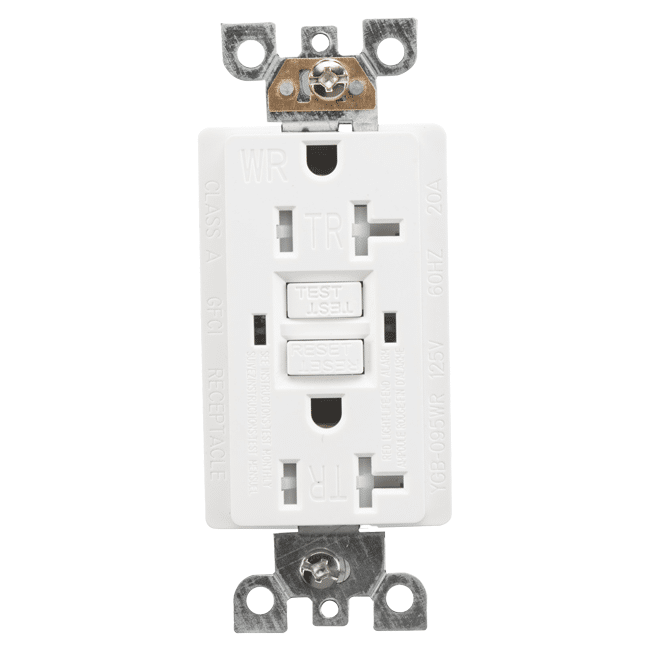
Yes, and it's a code difference, not a marketing one. A receptacle in a damp or wet location has to be listed and marked WR. This one is, and the WR is stamped on the face. Ordinary GFCIs use plated steel and plastics that corrode once moisture reaches them. This one uses corrosion resistant parts, rated -35°C to 66°C.
Are there weatherproof GFCI outlets?
Not as a device, no. Weather resistant and weatherproof are different things, and mixing them up fails inspection. WR describes the receptacle. Weatherproof describes the cover. A wet location needs both: a WR receptacle plus an enclosure keeping the receptacle and any plug dry, usually an extra-duty in-use cover.
Why 20A, and why Class A matters
The 2024 Canadian Electrical Code calls for Class A GFCI protection on 5-15R and 5-20R receptacles outdoors within 2.5 m of grade. This is the 5-20R half, so it takes 5-15P and 5-20P plugs on a 20A circuit. Class A means a trip point between 4mA and 6mA. This one sits at 5mA, clearing under 25mS. Check which edition your province runs.
Wiring it, and what won't work
Copper or copper-clad only. Never aluminum. It ships tripped and won't reset until LINE and LOAD are correct with power on, so a dead face usually means those two are reversed. LINE feeds the device, LOAD feeds what's downstream. Don't use a box holding more than four wires, grounds excluded. Torque the terminals to 14 in-lbf.
What the indicator light means
Green means powered, reset, passing self-test. Red means a fault or a failed self-test. Flashing red, on models that support it, means end of life. Replace it. Press test then reset monthly. And if the red light is dark, protection is still working.
For the wiring diagrams, box fill limit and full test sequence, open the Manual (PDF) in the Related documents panel, and grab the Spec sheet for dielectric and short-circuit figures on a submittal. Send us your quantities and we'll come back with a wholesale quote and confirm which cover the location needs.