











 (+1) 905 597 5955


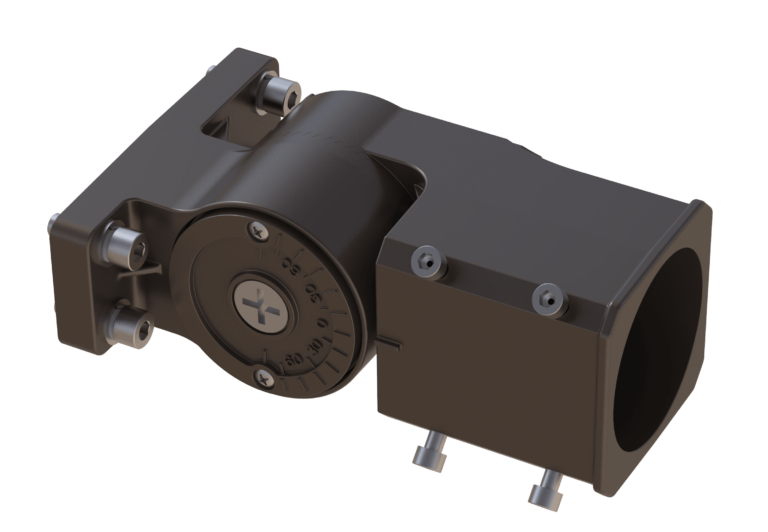
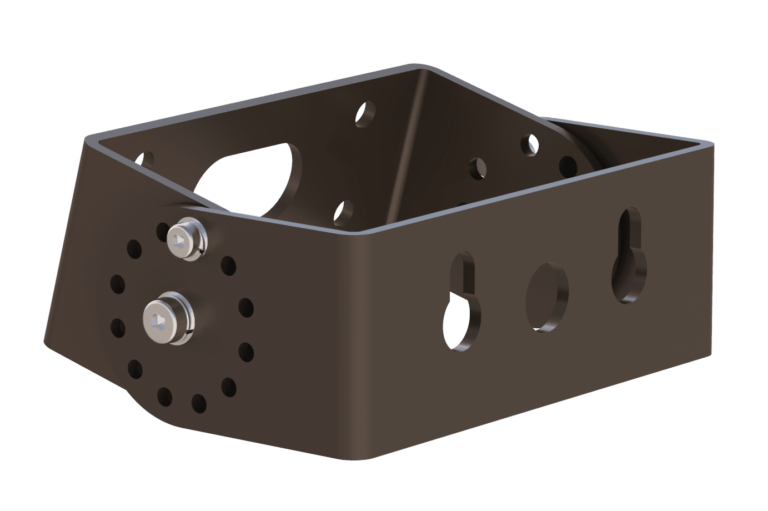
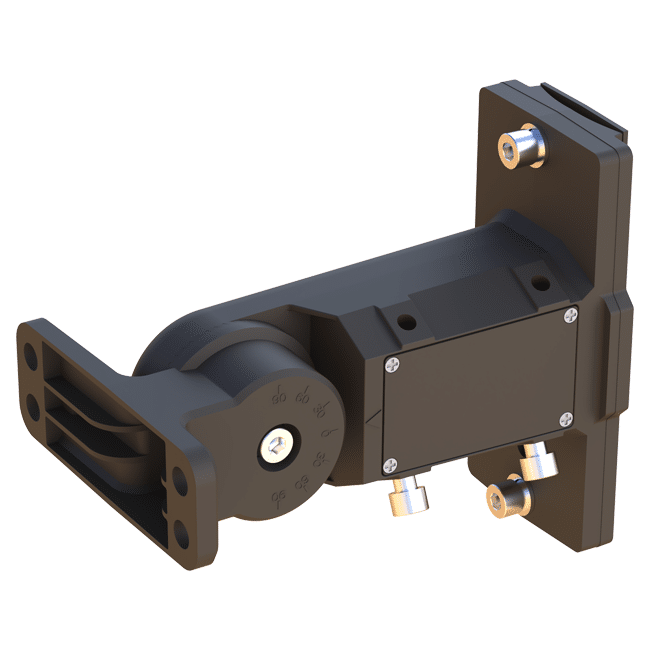


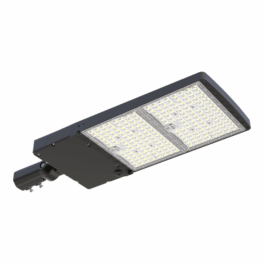
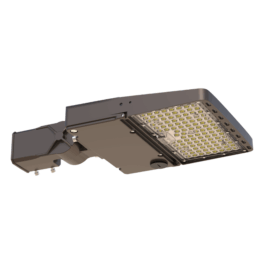
This LED shoebox area light carries three switches, not one. Set wattage, colour temperature and beam distribution on the same DIP block, then flip the built-in photocell on for dusk-to-dawn control.
Pick 200W, 240W or 300W. Choose 3000K, 4000K or 5000K. Select T3, T4 or T5 optics. Output runs 25,400 to 43,500 lumens with CRI above 80.
Aluminum housing, cULus wet location, IP65, 5 year warranty.
What is an LED shoebox light?
A shoebox light is a rectangular, pole-mounted outdoor fixture that lights parking lots, yards and roadways. The name describes the shape. Canadian contractors also call it an area light or a pole light, and it's the standard format for re-heading existing poles.
How many lumens should a parking lot light be?
It depends on pole height and how far the light has to throw, which is why this fixture ships with three optics instead of one. T3 spreads 148° x 111° for perimeter rows and roadway edges. T4 gives 147° x 118° for forward throw off a building line. T5 opens to 148° x 152° for centre poles in open lots. At 4000K the tested output runs 28,327 lumens at 200W up to 43,022 lumens at 300W. Step the wattage down on a tight site rather than ordering a second part number.
Three switches, one part number
Distributors stock one item and cover the whole job. The switches sit under a plastic cover on the housing. Unscrew it with a flat screwdriver, set wattage, CCT, beam angle and the photocell on the DIP block, then screw the cover back on. Efficacy peaks at 155 lm/W in the 200W setting, so a stepped-down fixture isn't a derated one.
What mounts it, and what's in the box
Three brackets fit: a slip-fitter for a Ø63mm tenon, a universal bracket that through-bolts square or round poles on a 6-M8 pattern, and a universal on tenon bracket. All three tilt 90° either way. Order brackets separately, they're accessories. What does ship with every configuration is a 6 ft power cable and a 6 ft dimming cable. Supply conductors must be rated 90°C minimum.
For the bracket drill patterns, the wiring diagram and the photocell delay settings, open the Manual (PDF) in the Related documents panel, and pull the IES file if your designer needs photometry for a layout. Send us your pole count, mounting height and lot dimensions and we'll come back with a wholesale quote and a beam-type recommendation.