










 (+1) 905 597 5955


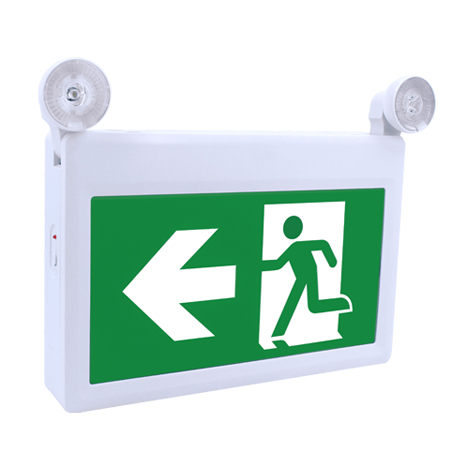
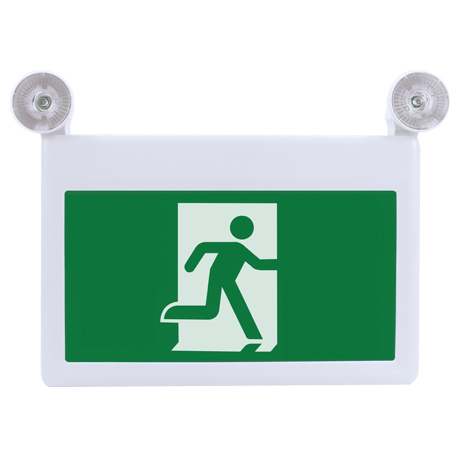
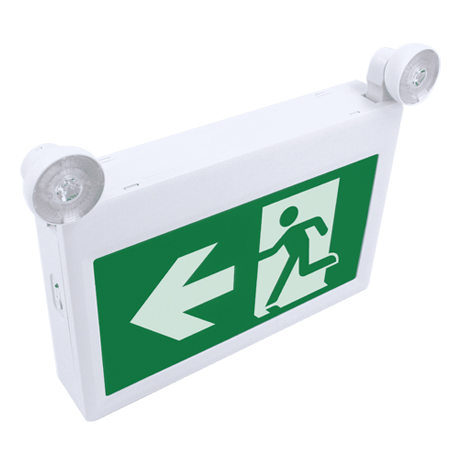


The JRMECW puts a running man sign and two adjustable LED heads in one damp-rated housing, so a single fixture covers both code jobs at a door.
Four watts total, 140 lumens, 6000K, CRI 65. The same unit takes 120V or 347V off the same terminal block, so you don't order a different part number per panel.
Thermoplastic ABS housing, cULus-Listed, five-year warranty. Three pictograms in the box.
What's the difference between an exit light and an emergency light?
An exit light marks the door. An emergency light lights the path to it. The JRMECW does both, which is what makes it a combo. The running man stays lit whenever the building has power, and the two 1W heads only strike when the mains drop. Ontario's Building Code treats these as separate obligations, signage under Article 3.4.5.1 and egress illumination under 3.2.7.3, so one combo closes two line items from one back box.
Do emergency exit lights need to be hardwired?
Yes. This unit wires to building AC and won't run off a plug. White goes to neutral, then you pick your hot lead: black for 120V, red for 347V, and cap the one you don't use. The manual calls for flexible conduit only. Give the battery a full 24 hours before you count on it, because a unit tested straight out of the carton won't hold its rated time.
Three pictograms, chosen at the door
Every unit ships with three legends, one plain running man and two with arrows. The pictogram slides out of the diffuser and back in, so an installer who meets an unexpected door swing changes the arrow instead of reordering. Head direction works the same way. You choose forward or backward before seating each head, which matters on a corridor where the sign faces one way and the light has to throw the other.
For the wiring diagram, the canopy locking sequence and the full safeguard list, open the Manual (PDF). Send us your door count and we'll come back with a wholesale quote and a voltage check against your panel.