












 (+1) 905 597 5955


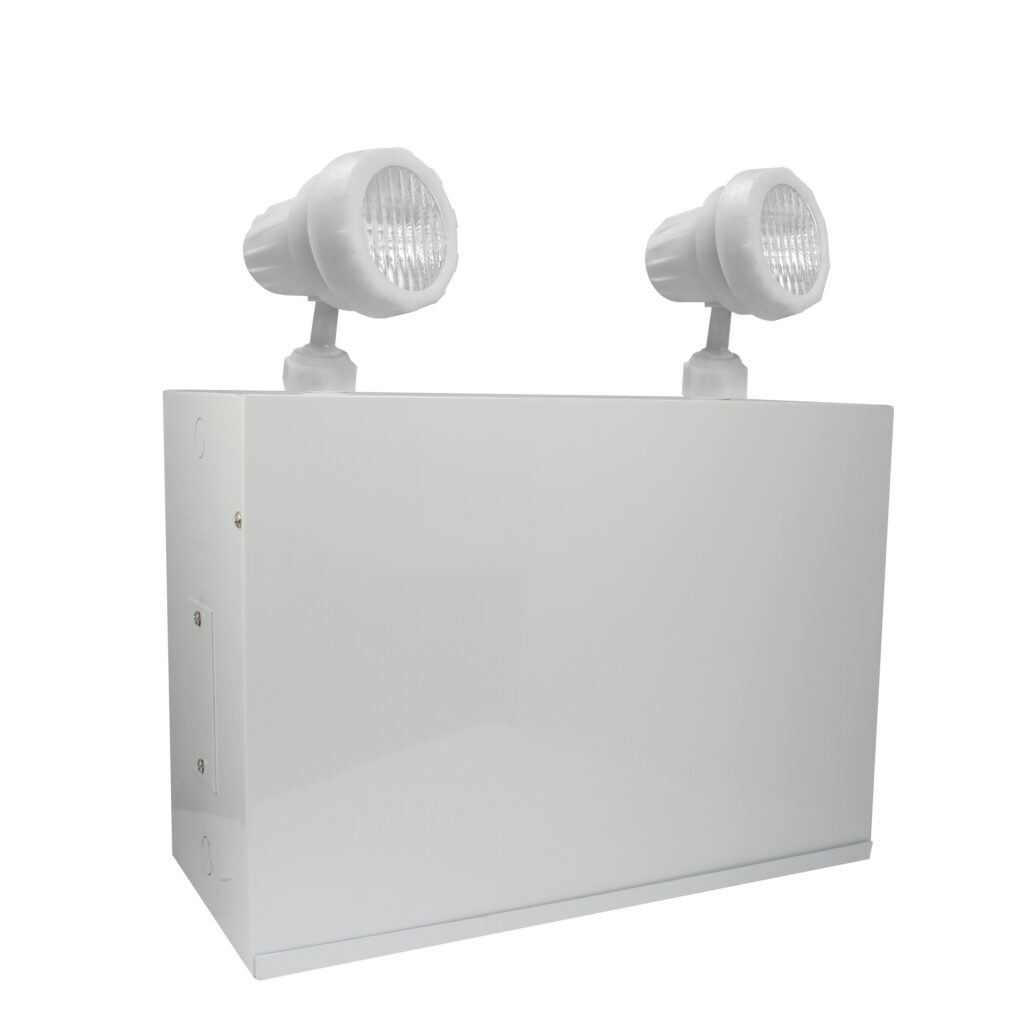


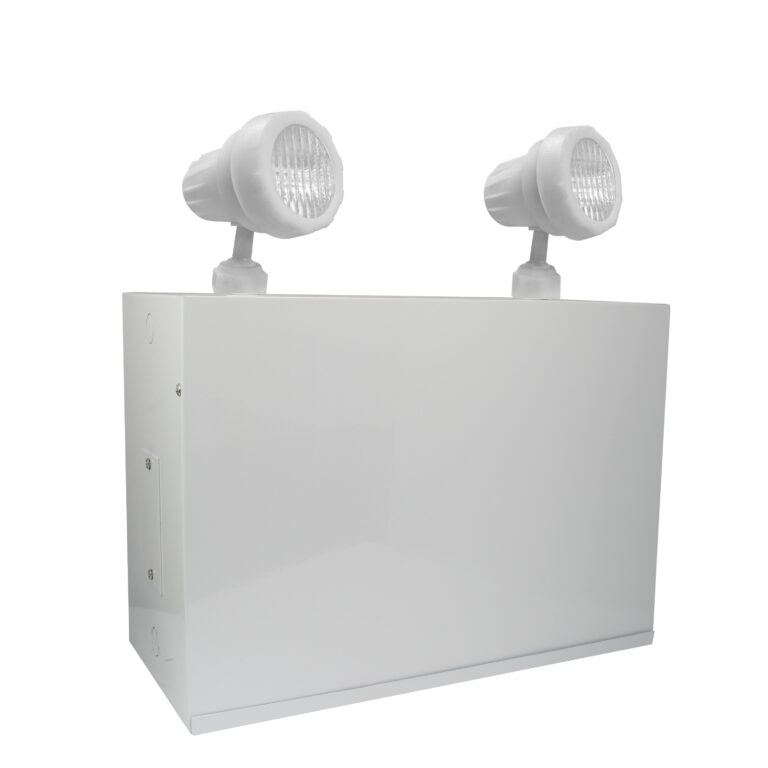
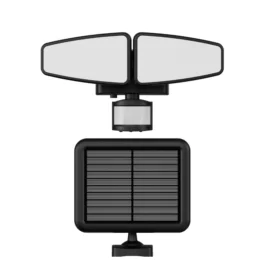
This steel emergency battery unit drives two integral lamp heads plus remote heads on one 6V DC circuit, so a single unit can cover a corridor and the rooms off it.
Rated 36W, with 30 minutes of runtime at full load from a 6V 6Ah lead-acid battery. Input is AC120-347V. Output runs 6000-6500K at CRI above 80, on a 30 degree beam.
Body's 20-gauge powder-coated steel with thermal plastic heads. CSA listed to C22.2 No. 141-15, 5-year warranty.
What are emergency lights with remote capability?
A remote-capable unit holds the battery and charger, then feeds extra lamp heads mounted away from the box. You wire those heads back to its low-voltage output instead of giving each one its own battery. One unit, one test switch, one battery to replace.
This one outputs 6V DC, and Votatec's single and double remote lamp heads accept DC6V-24V. The manual voids the warranty on accessory equipment it hasn't recommended, so source the heads with the unit.
How long will it last on battery?
Thirty minutes at the unit's full rated load. Runtime climbs steeply as you take load off, and the manual publishes four points:
- 36W: 30 minutes
- 12W: 90 minutes
- 9W: 120 minutes
- 2W: 9 hours
Recharge takes 24 hours from flat.
What are the legal requirements for emergency lights in Ontario?
Ontario Building Code 3.2.7.4 sets duration by building, not by fixture. Most occupancies need 30 minutes. Group B occupancies and Group C retirement homes outside Subsection 3.2.6 need 1 hour, high buildings inside 3.2.6 need 2 hours. That same article requires self-contained units to conform to CSA C22.2 No. 141, which this one is listed to.
Read that against the table above. Full load meets the 30 minute baseline. A 1 hour building means coming down near 12W, a 2 hour building near 9W.
Testing is ongoing. The manual states code requires a 30 second test every 30 days plus a full-duration test yearly, with written records for both.
Wiring, placement and commissioning
Feed it from an un-switched 24-hour circuit. A switched feed is the first thing the manual's troubleshooting chart blames when lamps won't come on. That circuit needs a lock-on breaker too, and the manual voids the warranty without one.
Leave 8 inches of slack at the junction box, and insulate every unused conductor. Keyhole slots and conduit knockouts are stamped into the housing.
Two notes save a callback. Allow 15 minutes on AC before the AC-ON and charge LEDs settle, and a full 24 hour charge before any duration test. Ambient range is 5°C to 30°C, so unheated garages, stairwells and vestibules are out.
For wiring diagrams and the test regime, open the Manual (PDF), and the Spec sheet for the rating tables. Send us your head count and the duration your occupancy needs, and we'll quote it with a check that the remote load fits.